2026 Toyota bZ Charging Guide for North Hollywood Drivers
2026 Toyota bZ Charging Guide for North Hollywood Drivers
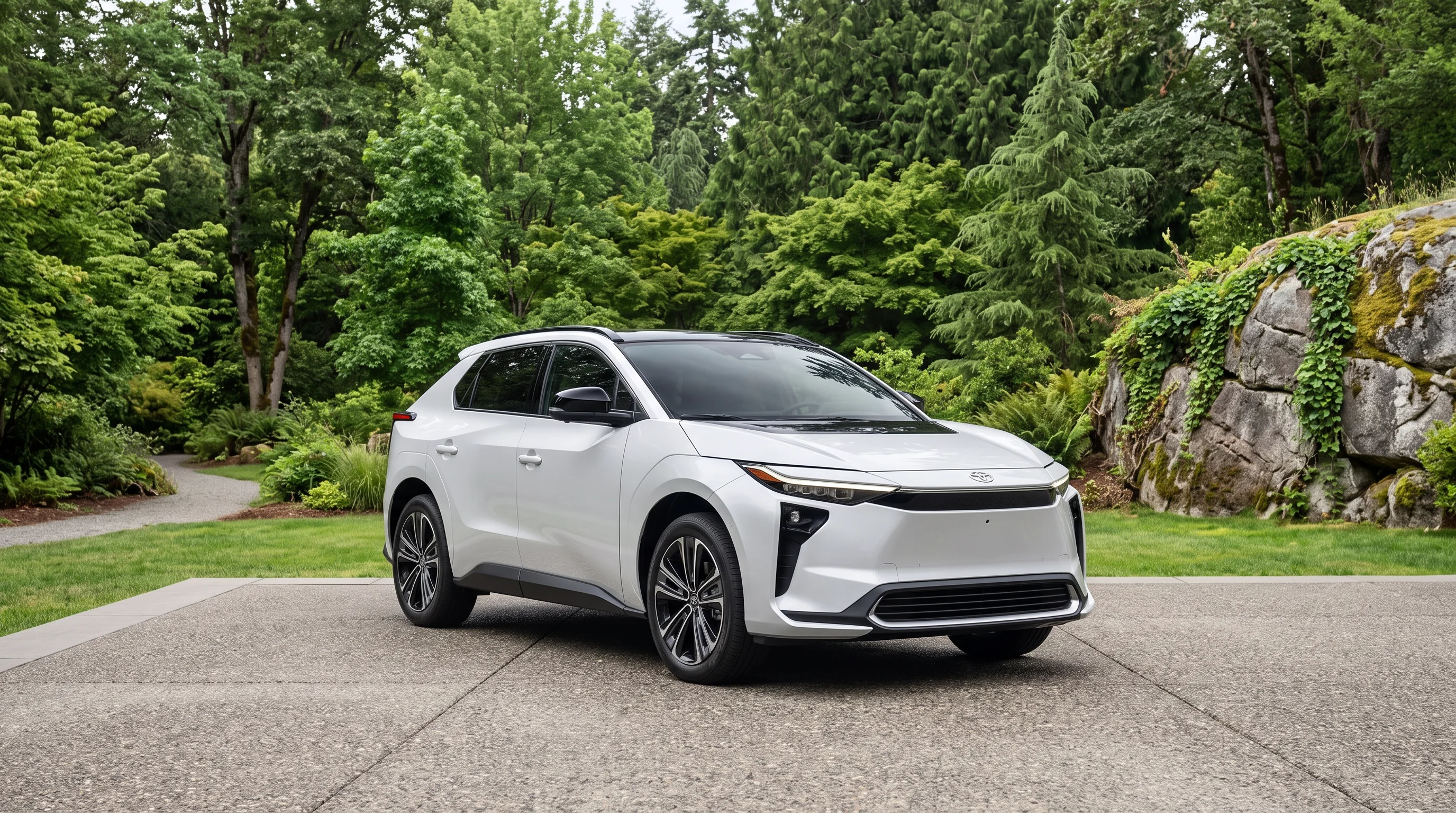
The 2026 Toyota bZ charges three ways. You can use a standard 120-volt household outlet, a 240-volt Level 2 setup, or DC fast charging on the road.
For most Valley drivers, a Level 2 wall box handles nearly all of it. Toyota rates the bZ at roughly seven hours from 10% to a full battery on an 11-kW Level 2 source. That is a normal night's parking.
This guide covers what each charging method delivers. It also walks through what installing a home charger involves. And it covers how the bZ's charging port works once you leave the driveway.
How Fast Does the 2026 Toyota bZ Charge?
Three charging levels, three very different results
Charging speed depends on the power source you plug into. The car is the same in every case. What changes is how quickly electricity can reach the battery.
Charging Methods Compared
| Charging Method | Power Source | Range Added | 10% to 100% |
|---|---|---|---|
| Level 1 | 120V household outlet at 12 amps | About 4–5 miles per hour | About 50 hours |
| Level 2 | 240V circuit, 11-kW source at 48 amps | About 35–40 miles per hour | About 7 hours |
| DC Fast Charging | Up to 150 kW | Road-trip speed | 10% to 80% in about 30 minutes |
Charge times per Toyota's official bZ charging FAQ. Range-added figures are calculated from those charge times and EPA-estimated efficiency.
Level 1: The Standard Household Outlet
Level 1 is the simplest option. The bZ includes a portable dual-voltage charging cable that plugs straight into a grounded three-prong outlet. That adds roughly four to five miles of range per hour.
It works if you drive under about 40 miles a day. You also need to park at home most nights. Below that threshold it quietly keeps up. Above it, you fall behind. A full charge from 10% on a 12-amp household circuit takes around 50 hours. Treat Level 1 as a top-up rather than a reset.
Level 2: Where Most Owners Land
The 2026 bZ carries an 11-kW onboard AC charger, up from 7 kW on the previous model. That upgrade is the single biggest change to daily ownership.
Plugged into a 240-volt circuit, the bZ adds roughly 35 to 40 miles of range per hour. Toyota's seven-hour figure for a 10% to 100% charge assumes a full 11-kW source drawing 48 amps. In practice that means a dedicated wall box on a 60-amp circuit.
The included dual-voltage cable is the no-extra-hardware path to Level 2 charging, and it requires a 240-volt NEMA 14-50 outlet. It draws less current than a 48-amp wall box, so plan on a longer session than seven hours if that is your setup.
DC Fast Charging: Built for Road Trips
The bZ peaks at 150 kW. Under ideal conditions it moves from 10% to 80% in about 30 minutes, according to Toyota's 2026 bZ press release. Charging slows considerably above 80% by design. That is why fast-charging stops are usually planned to end there.
⚡ Battery Preconditioning Is Standard
Every 2026 bZ brings the battery pack to its optimal temperature before DC fast charging, which matters most in cold weather. It runs automatically when you set a fast-charging station as your navigation destination, or you can trigger it manually.
Charging times and charging rates are estimates based on ideal conditions and are provided for comparison purposes only. Actual results will vary depending on ambient temperature, battery temperature and state of charge, the output and condition of the charging equipment used, and other factors. Battery capacity decreases with time and use, which will affect charging performance.
Should You Install a Level 2 Wall Box at Home?
What your panel actually needs — and what it does not
For most owners, yes. A Level 2 wall box replenishes range roughly eight times faster than a standard household outlet. Overnight charging is also when electricity is cheapest.
What Your Electrical Panel Actually Needs
There is no minimum electrical service rating that qualifies or disqualifies a home. What governs is a load calculation. That is the method a licensed electrician uses to compare your home's existing demand against your panel's capacity.
Plenty of homes on 100-amp service support Level 2 charging with no panel upgrade at all. Where capacity is genuinely tight, load-management hardware is often far cheaper than replacing the panel. That matters here. Much of the local housing stock predates 200-amp service as a standard, including homes in North Hollywood, Valley Village and Toluca Lake.
Sizing the Circuit
Electrical code treats EV charging as a continuous load. The circuit is therefore sized above the charger's rated current. Toyota's own figures assume a 48-amp draw to reach the full 11 kW.
Home Level 2 Setup Options
| Charger Output | Dedicated Circuit | What You Get |
|---|---|---|
| 32 amps | 40-amp breaker | Works well, charges below the car's 11-kW ceiling |
| 40 amps | 50-amp breaker | Common install, still short of the 11-kW ceiling |
| 48 amps | 60-amp breaker | Full 11 kW, about 7 hours from 10% to 100% |
Before You Buy Hardware
- Have a licensed electrician run a load calculation on your panel. This determines everything else, and Toyota directs owners to use a licensed electrician for outlet or charger installation.
- Confirm there is physical room for a double-pole 240-volt breaker. A 240-volt circuit occupies two slots, and a full panel can be the real constraint even when capacity is not.
- If you rent, or live in a condo or apartment, check with property management or your HOA before committing to equipment.
💡 When You Charge Changes What You Pay
LADWP prices overnight and weekend hours below weekday afternoons. We break down rate plans, rebates and charging windows in our LADWP time-of-use EV charging rates guide.
Information regarding home electrical service, circuits, and charging equipment installation is general guidance only and does not constitute an electrical assessment of any individual property. Electrical capacity, code requirements, and permitting vary by home and jurisdiction. All installation work should be performed by a licensed electrician following a property-specific load calculation.
Charging the bZ Away From Home
Native NACS access across the San Fernando Valley
Native NACS and Supercharger Access
The 2026 bZ is Toyota's first EV with a native North American Charging System (NACS) port. It plugs directly into Tesla Superchargers with no adapter. Toyota reports that more than 25,000 additional plugs became available to bZ drivers with that change.
Every 2026 Toyota battery electric vehicle also ships with complimentary adapters. They cover SAE J1772 AC stations and CCS fast chargers, so the older public infrastructure stays available to you.
Public Charging Around North Hollywood
Locally, that access is practical rather than theoretical. Supercharger sites operate at Universal City just south of the dealership. More sit in Burbank, all within a short drive of North Hollywood.
Beyond the Tesla network, ChargePoint, EVgo, Electrify America, Blink and FLO all run stations nearby. You will find them across North Hollywood, Valley Village and Burbank. Between them they cover Level 2 stops for longer parking and DC fast charging for quick turnarounds.
Plug & Charge and the Toyota App
The bZ supports Plug & Charge. You enroll once through the Toyota app. After that, plugging in authenticates and bills the session automatically. No app to open, no card to tap. Plug & Charge launched on the Tesla Supercharger network first, with additional networks following.
The 14-inch multimedia screen and the Toyota app both help you locate stations. Apple Maps EV Routing through CarPlay uses real-time vehicle data, including battery performance and elevation changes along your route, to point you toward compatible chargers on the way. From the app you can check charge status. You can also start or stop a session remotely and set charging schedules.
Efficiency and range vary across the lineup. For a closer look, see our 2026 Toyota bZ MPGe and range guide, or explore the full 2026 Toyota bZ research page. General charging background is available from Toyota's electrified vehicle charging resource.
⚠ Connected Features Require a Subscription
Remote charging controls, scheduling and station search run on trial subscriptions that require renewal, and they depend on cellular network coverage.
Common Questions About Charging the 2026 Toyota bZ
Straight answers to what North Hollywood drivers ask most
Will leaving the bZ plugged in overnight overcharge the battery?
No. The onboard battery management system monitors voltage, current and cell temperature continuously, and it stops the flow of electricity once the battery reaches full charge or the limit you have set. Leaving it plugged in overnight is normal and is how most owners charge.
Can I plug the portable charger into an extension cord?
No, and Toyota prohibits it. Running heavy current continuously for hours through a standard household extension cord can cause it to overheat, and an extension cord has no ground-fault protection of its own, which can keep the charging cable's built-in leakage detection from working correctly. Always plug the portable cable directly into a properly grounded wall receptacle.
What does battery preconditioning actually do?
It brings the battery pack to its ideal temperature window before you reach a DC fast charger, so the car can accept high charging power immediately instead of ramping up slowly. That shortens the time you spend at the station, and the benefit is largest in cold weather.
How do I start a charging session at a public NACS station?
Once you have enrolled in Plug and Charge through the Toyota app, plugging the connector in handles authentication and payment on its own. You can also start and pay for sessions at a variety of networks directly through the Toyota app, which requires an active Remote Connect trial or subscription.
See the 2026 Toyota bZ at North Hollywood Toyota
Between the native NACS port, the 11-kW onboard charger and standard battery preconditioning, the 2026 bZ is built to make charging routine rather than something you plan your week around. Our team on Lankershim Boulevard can walk you through home charging options and the current lineup.
Visit us at 4606 Lankershim Blvd, North Hollywood, CA 91602 | Call 818-369-3922