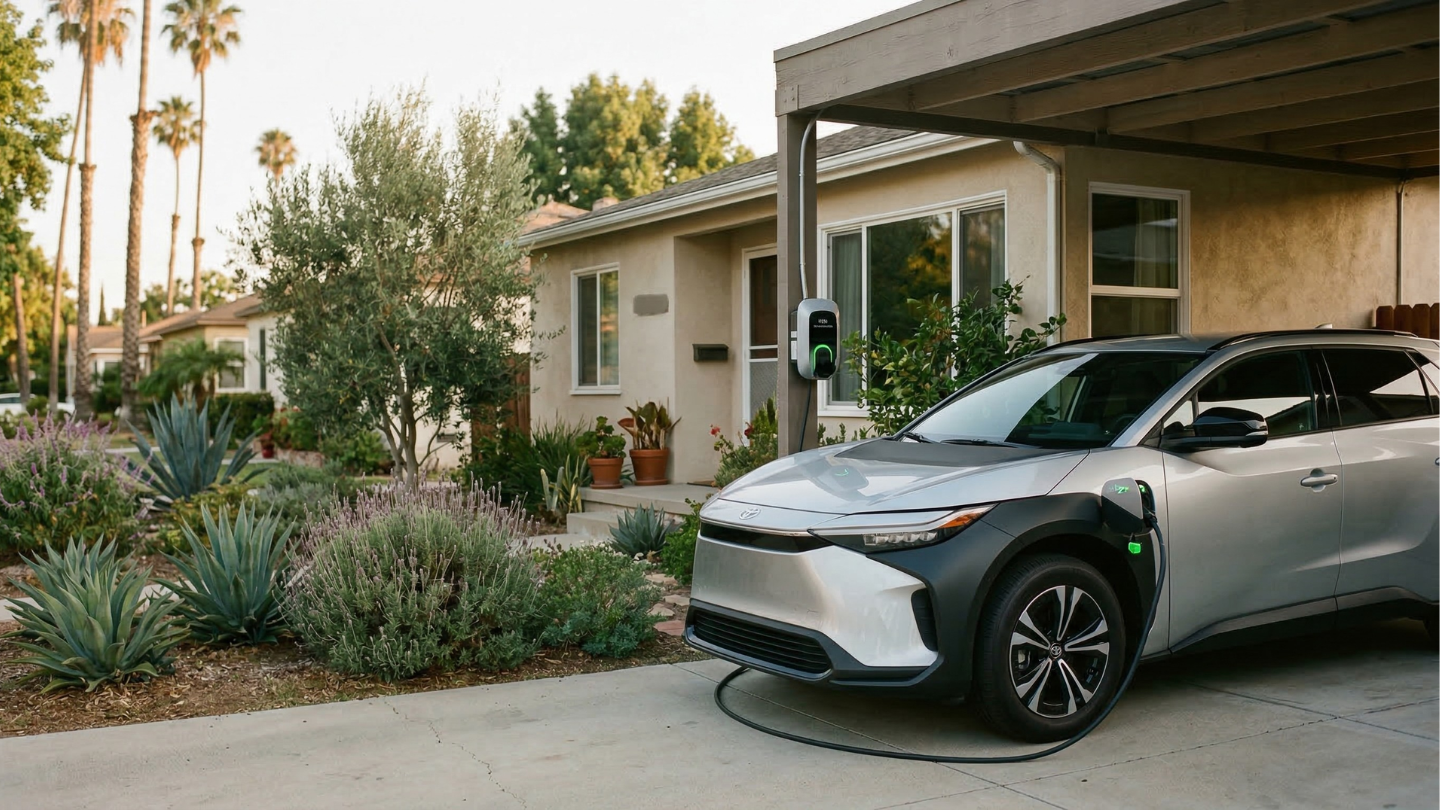
Time-of-Use Rates: When Is Electricity Cheapest for Charging in LA?
If you drive an electric vehicle in Los Angeles, when you charge matters just as much as how you charge. The Los Angeles Department of Water and Power (LADWP) offers a Time-of-Use (TOU) residential rate plan called R-1B that prices electricity differently depending on the time of day. For EV owners in North Hollywood, Burbank, Studio City, and throughout the San Fernando Valley, understanding this rate structure can translate into meaningful savings on your monthly electricity bill — especially if you pair it with the right vehicle and charging setup.
How LADWP's R-1B Time-of-Use Rate Works
Three pricing periods based on grid demand — charge smarter, pay less
Unlike LADWP's standard tiered plan (R-1A), which charges more as your total consumption rises, the R-1B TOU plan divides each day into three pricing periods based on grid demand. Electricity costs less when fewer people are using it and more during the afternoon hours when air conditioning and commercial activity peak.
LADWP R-1B Weekday Rate Periods
| Period | Weekday Hours | Cost Level |
|---|---|---|
| Base Period | 8:00 PM – 9:59 AM | Lowest ⚡ |
| Low Peak Period | 10:00 AM – 12:59 PM & 5:00 PM – 7:59 PM | Moderate |
| High Peak Period | 1:00 PM – 4:59 PM | Highest |
💡 Weekend & Holiday Bonus
Saturdays, Sundays, and holidays are treated as Base period all day — charge anytime at the lowest rate.
The R-1B plan includes a $12 monthly service charge and eliminates the tiered structure entirely. For EV owners, the key advantage is clear: charge your vehicle during the Base period — overnight and on weekends — and you pay the lowest available rate per kilowatt-hour. Charging during the High Peak window on a weekday afternoon could cost roughly 30–40% more depending on the season.
Rates adjust quarterly and vary between LADWP's winter (October–May) and summer (June–September) schedules, so checking LADWP's current residential rate page before making decisions is always a smart move.
R-1B vs. R-1A: Which Plan Works Better for EV Owners?
Tiered billing vs. time-based billing — the difference matters
If your household already pushes into Tier 3 on the standard R-1A plan — which commonly happens once you add regular EV charging to your electricity load — switching to R-1B can reduce your overall costs by letting you shift that heavy charging consumption to the cheapest hours of the day.
| Factor | R-1A (Standard Tiered) | R-1B (Time-of-Use) |
|---|---|---|
| Pricing Model | Cost rises as total usage increases | Cost varies by time of day |
| EV Charging Impact | Every kWh adds to tier — may push into Tier 3 | Overnight charging uses lowest-cost Base period |
| Best For | Low-usage households with daytime loads | EV owners who charge overnight or on weekends |
| Service Charge | Minimum $10/month | $12/month flat |
However, if your household runs significant loads during weekday afternoons — home offices, air conditioning, pool pumps — and you cannot shift those, the High Peak surcharge on R-1B may offset the overnight savings. LADWP recommends evaluating your usage patterns before switching, and the utility provides tools to help compare plans.
Maximizing Savings: Smart Charging Strategies
Practical steps to get the most from LADWP's Base period pricing
The easiest way to take advantage of LADWP's Base period pricing is to schedule your EV charging to start automatically after 8:00 PM on weekdays. Most modern EVs, including the 2026 Toyota bZ, include built-in charge scheduling that lets you set specific charging windows directly from the vehicle's infotainment system or through a connected mobile app.
| Strategy | How It Helps |
|---|---|
| Schedule overnight charging | Set your EV or Level 2 charger to begin at 8:00 PM and run through the night — fully charged by morning at the lowest rate |
| Charge on weekends | LADWP treats Saturdays, Sundays, and holidays as Base period all day — charge anytime without High Peak rates |
| Install a dedicated EV meter | Qualify for LADWP's $0.025/kWh discount on Base period charges — isolates EV billing from household usage |
| Shift appliances to off-peak | Run dishwasher, laundry, and water heater during Base period to reduce overall peak consumption |
LADWP Rebates & Federal Incentives
Financial programs that reduce your upfront charger installation costs
LADWP's Residential EV Charger Rebate Program helps offset the cost of installing a Level 2 (240-volt) home charger — the recommended setup for overnight TOU charging.
Current Incentive Breakdown
| Incentive | Amount |
|---|---|
| LADWP Level 2 Charger Rebate | Up to $1,000 |
| Dedicated EV Meter Rebate | $250 |
| Additional Lifeline/EZ-SAVE Rebate | $500 (income-eligible) |
| Federal 30C Tax Credit | Up to $1,000 (expires June 30, 2026) |
⚠ Federal Tax Credit Deadline
The Section 30C tax credit applies to chargers placed in service on or before June 30, 2026. Consult a tax professional to confirm eligibility. LADWP's own rebate program continues beyond this deadline.
Combining LADWP's rebate with the federal tax credit can offset a significant portion of your Level 2 charger and dedicated meter installation costs.
How the 2026 Toyota bZ Makes TOU Charging Easy
Purpose-built features for smart home charging
Toyota's refreshed 2026 Toyota bZ — formerly the bZ4X — is purpose-built for smart home charging. With a manufacturer-estimated range of up to 314 miles on the XLE FWD Plus model and its 74.7-kWh battery, most North Hollywood commuters can charge once or twice a week during Base period hours and cover their daily driving with room to spare.
With an MSRP starting at $34,900, the 2026 bZ positions itself as a practical, affordable EV for Los Angeles drivers who want to pair Toyota reliability with LADWP's cost-saving rate structure.
Start Saving on EV Charging in North Hollywood
Understanding LADWP's TOU rate structure is one of the smartest moves you can make as an EV owner in Los Angeles. By charging during the Base period, installing a dedicated EV meter for the additional per-kWh discount, and taking advantage of available rebates, you can keep your monthly charging costs well below what you'd spend fueling a comparable gas vehicle. For more on EV ownership and battery longevity, read our guide on how long an EV lasts.
Visit us at 4606 Lankershim Blvd, North Hollywood, CA 91602