Factory-Certified Toyota Service at 4606 Lankershim Blvd
Toyota Repair and Maintenance Services in North Hollywood
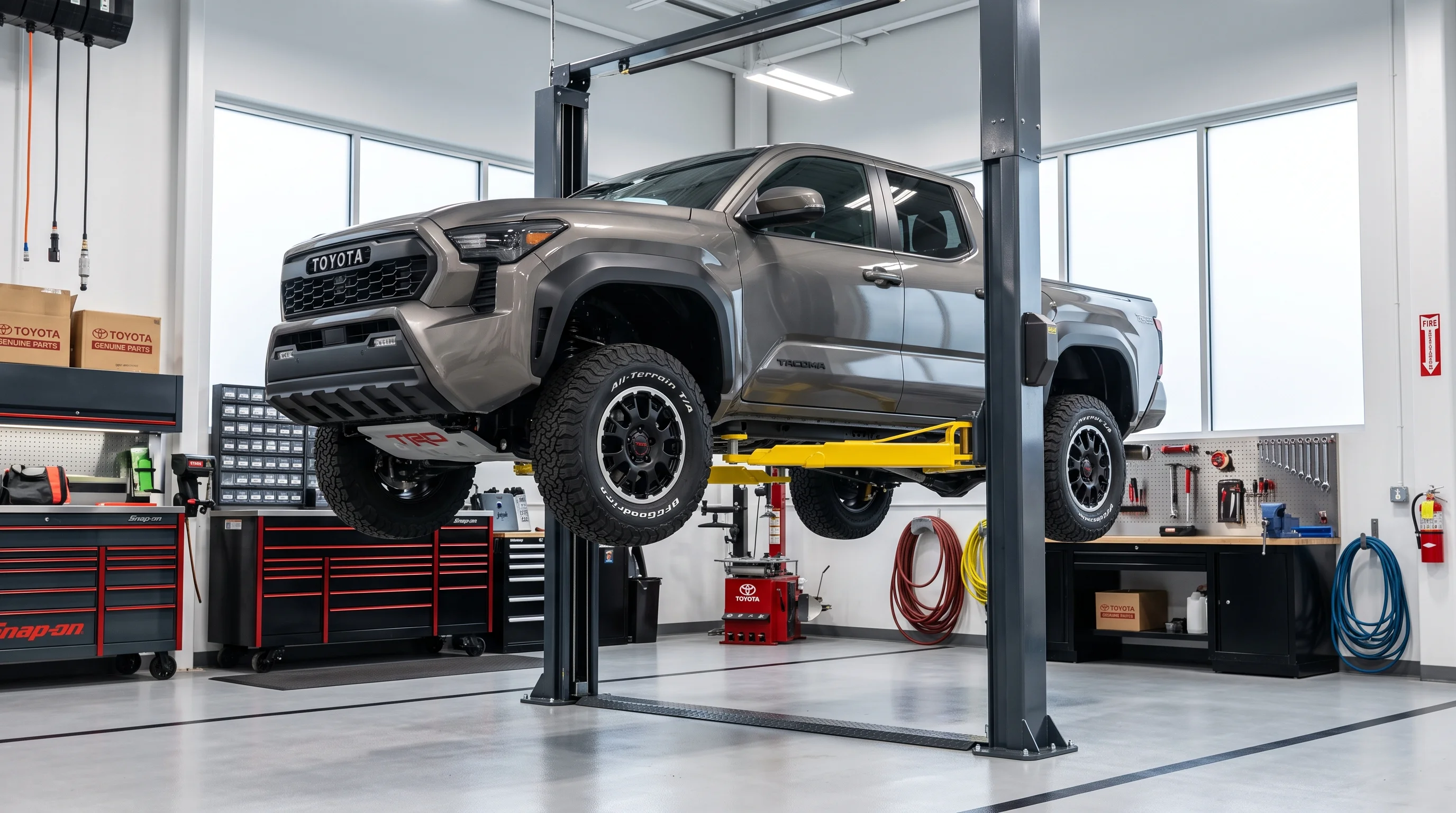
What Routine Maintenance Services Are Required for a Toyota Vehicle in North Hollywood?
Factory-scheduled intervals, what happens at each one, and what ToyotaCare covers
Toyota vehicles need scheduled service every 5,000 miles or 6 months. That visit covers tire rotations and a multi-point safety inspection. Synthetic motor oil and filter changes follow every 10,000 miles or 12 months. Complete preventative care also includes cabin and engine air filter replacements, brake pad inspections, fluid level checks, and sensor cleanings at set mileage intervals.
Every new Toyota comes with ToyotaCare. It is a no-cost factory plan that covers normal scheduled maintenance. Sticking to the timeline protects fuel economy. It also helps the engine last longer.
ToyotaCare coverage length depends on model year. For model year 2027 and newer, ToyotaCare covers normal factory-scheduled maintenance for 1 year or 10,000 miles, whichever comes first, while vehicles from model year 2026 and earlier carry 2 years or 25,000 miles. Both include 24-hour roadside assistance for 2 years with unlimited mileage, covering towing up to 25 miles, battery jump-starts, flat tire changes, lockout service, and limited emergency fuel delivery. Roadside assistance does not include parts and fluids. Coverage terms differ for Mirai, Prius, and Toyota electrified models, so confirm the terms that apply to your vehicle.
Toyota Factory Maintenance Intervals
| Service Interval | Time Interval | Key Services Performed |
|---|---|---|
| 5,000 miles | 6 months | Tire rotation, pressure and tread check, multi-point inspection, fluid level check, brake inspection |
| 10,000 miles | 12 months | Engine oil and filter replacement using the full synthetic grade specified for your model, most commonly 0W-20 or 0W-16 |
| 15,000 to 30,000 miles | Varies by conditions | Cabin air filter and engine air filter replacement |
| 30,000 miles | 36 months | Major service: oil and filter, both air filters, tire rotation, brake and suspension evaluation, fluid condition testing |
| 100,000 miles | 10 years | First engine coolant replacement, then every 50,000 miles or 5 years |
Intervals reflect Toyota's standard schedule under normal driving. Exact items and timing vary by model, engine, and model year. Confirm against your vehicle's Warranty & Maintenance Guide, available through Toyota Owners Manuals and Warranties. Additional general schedule guidance via J.D. Power.
Routine Maintenance Checklist
Routine scheduled maintenance for Toyota cars, crossovers, and trucks includes:
- Engine oil and filter replacement, every 10,000 miles or 12 months under standard driving conditions
- Tire rotation, pressure adjustment, and tread depth check, every 5,000 miles or 6 months
- Front and rear brake pad, rotor, caliper, and brake line inspection
- Engine air filter and cabin micro-filter replacement, typically every 15,000 to 30,000 miles
- Fluid inspection and topping off, covering coolant, brake fluid, windshield washer fluid, and transmission fluid
- Inspection and cleaning of Toyota Safety Sense camera and radar sensor lenses
- 12-volt battery health test and terminal corrosion check
Driving a hybrid? The schedule adds a few model-specific items. Our complete Toyota hybrid maintenance schedule walks through them.
Looking for certified factory technicians? The North Hollywood Toyota service bay is at 4606 Lankershim Blvd. Call the service desk to set up an appointment.
Driver-assistance and advanced safety systems are supplemental aids and are not substitutes for safe and attentive driving. Availability, operation, and effectiveness vary by trim and equipment and depend on factors including road, weather, traffic, and vehicle condition. Always keep your hands on the wheel and your eyes on the road. See your owner's manual for system limitations and details.
How Does Los Angeles Stop-and-Go Driving Affect Toyota Synthetic Oil Change Intervals?
When Los Angeles commuting meets Toyota's Special Operating Conditions
Extensive idling and long stretches of low-speed driving are listed by Toyota as Special Operating Conditions. For drivers whose commutes fit that description, Toyota calls for shortening the synthetic oil change interval from 10,000 miles down to 5,000 miles or 6 months.
What Toyota Lists as Special Operating Conditions
Most Toyota models run on 0W-20 or 0W-16 full synthetic motor oil, though some newer models specify other grades, such as 0W-8. Under normal conditions, you change the oil and filter every 10,000 miles or 12 months. Toyota's published Special Operating Conditions are:
- Extensive idling or low-speed driving for long distances, as in delivery, taxi, or patrol use
- Towing a trailer, using a camper or car-top carrier, or heavy vehicle loading
- Repeated short trips of less than 5 miles in temperatures below freezing
- Operating on rough, muddy, or salt-covered roads
- Operating on unpaved or dusty roads
When any of these apply, Toyota calls for engine oil replacement at 5,000-mile intervals regardless of the oil grade used.
Why This Matters in North Hollywood
Of those conditions, the one most likely to apply to North Hollywood drivers is extensive idling and low-speed driving over long distances. A commute that spends most of its time crawling rather than cruising fits that description. In slow traffic the engine runs far longer than the odometer suggests, so the oil accumulates operating hours without accumulating miles.
Two points worth noting. The short-trip condition carries a freezing-temperature qualifier, so it rarely applies locally. And heat on its own is not one of Toyota's listed Special Operating Conditions, though warm weather does make cooling systems and air conditioning work harder, which is part of why routine coolant checks appear on the schedule.
If you are not sure which schedule fits your driving, our service advisors can review your conditions and confirm the right interval for your vehicle.
The information in this article is general guidance and does not constitute a specific diagnostic or repair recommendation for any individual vehicle. Repair and maintenance decisions should be made in consultation with a certified technician based on the specific condition of your vehicle.
What Is Included in a Toyota 30,000-Mile Service Inspection and Brake Maintenance?
The full checklist, plus what brake wear actually looks and sounds like
A Toyota 30,000-mile service inspection covers a lot of ground. It includes a multi-point system check, a synthetic oil and filter change, and a tire rotation. Both the engine air filter and the cabin air filter are replaced. The visit closes with an in-depth brake system evaluation.
The 30,000-Mile Service Checklist
At the 30,000-mile mark, technicians handle key preventative replacements. They also check wear items before those parts affect safety or driveability. The 30,000-mile or 36-month checklist covers:
- Full engine oil and oil filter change with original equipment filter replacement
- Engine air filter and cabin dust and pollen filter replacement
- Complete tire rotation and electronic wheel balance check
- Inspection of front and rear brake pads, rotors, drums, lines, and hydraulic hoses
- Suspension component inspection, including shock absorbers, struts, ball joints, and steering linkages
- Drive shaft boot inspection and exhaust system leak check
- Inspection and cleaning of Toyota Safety Sense driver-assist sensors, which are housed behind the windshield and in the front grille area
- Testing brake fluid moisture levels, engine coolant strength, and transmission fluid condition
How Long Do Toyota Brake Pads Last?
Brake pad life varies more than almost any other wear item. Kelley Blue Book puts typical brake pad life at about 25,000 to 50,000 miles, or roughly two to five years, and notes that most pads can last up to about 50,000 miles with smart driving and braking habits. City traffic, heavy loads, and steep downhill braking all wear pads faster.
Because that range is so wide, inspection matters more than any mileage number. Watch for a high-pitched squeal from the wear indicators. Other signs include steering wheel vibration when braking, longer stopping distances, or a soft brake pedal. Fresh brake fluid prevents moisture contamination and caliper corrosion.
Driver-assistance and advanced safety systems are supplemental aids and are not substitutes for safe and attentive driving. Availability, operation, and effectiveness vary by trim and equipment and depend on factors including road, weather, traffic, and vehicle condition. Always keep your hands on the wheel and your eyes on the road. See your owner's manual for system limitations and details.
What Are the Signs That Your Toyota Needs Immediate Suspension Repair?
Five warning signs worth acting on before they damage tires and alignment
Several signs mean a Toyota needs suspension repair right away. Watch for uneven tire wear or the car pulling to one side on flat roads. Excessive body bounce over bumps is another. So are clunking noises over rough pavement and visible fluid leaks on the shock absorbers.
Suspension systems absorb road impacts and keep the tires on the pavement. When shocks, struts, control arm bushings, or sway bar links wear out, handling and safety drop off quickly.
Suspension Warning Signs at a Glance
| Warning Sign | What It Usually Means |
|---|---|
| Uneven or premature tire wear | Cupping, feathering, or heavy wear on the inner or outer tread edge usually points to misaligned wheels caused by worn ball joints, tie rods, or sagging struts |
| Pulling or drifting | Straying from a straight path on a level highway often means worn control arm bushings or bent steering links are shifting wheel alignment under load |
| Excessive rebound and nose-diving | Bouncing more than once or twice after a dip, or dipping forward heavily under braking, indicates worn hydraulic shock absorbers |
| Knocking or clunking sounds | Metallic clunking over speed bumps or chatter during low-speed turns indicates loose sway bar end links, worn strut mount bearings, or degraded ball joints |
| Fluid leaks and heavy steering | Power steering fluid pooling under the front subframe or increased steering effort signals rack-and-pinion seal failure |
Replace worn suspension parts early. Waiting damages expensive tires. It also leaves the car less stable if you have to swerve.
The information in this article is general guidance and does not constitute a specific diagnostic or repair recommendation for any individual vehicle. Repair and maintenance decisions should be made in consultation with a certified technician based on the specific condition of your vehicle.
How Should You Choose Between an Independent Shop and a Factory-Authorized Toyota Service Department?
Five criteria that separate a capable shop from the wrong one
Should you use an independent shop or a factory-authorized service department? The answer comes down to three things. Technician certifications, diagnostic tools, and parts quality.
Independent shops often point to lower labor rates. Some also offer service menus that cover many brands. To judge any shop, look at three things: technician training, warranty guarantees, and what the facility can actually do.
Five Criteria for Evaluating Any Shop
| Criterion | What to Look For |
|---|---|
| ASE Certification | Look for ASE-certified master technicians. The National Institute for Automotive Service Excellence awards Master Automobile Technician status to technicians certified in the A1 through A8 tests, and credentials must be renewed every five years |
| Repair Warranties | Confirm that the shop backs its labor and installed replacement parts with a clear written warranty |
| Factory Diagnostic Equipment | Modern Toyota vehicles use proprietary software for computer diagnostics, electronic power steering calibration, hybrid battery health checks, and Toyota Safety Sense recalibration after alignment or windshield service |
| OEM Parts Usage | Shops vary in whether they install original equipment or aftermarket components, so ask before authorizing work. Original Equipment Manufacturer parts are built to exact factory fitment, metallurgical, and durability standards |
| Recall and Campaign Work | Only authorized dealer service departments can execute open safety recalls, service campaigns, and factory warranty repairs at no cost to the owner |
That last point is the one most owners underestimate. Under the National Traffic and Motor Vehicle Safety Act (49 U.S.C. § 30120), manufacturers must make safety recall remedies available at no charge, and those repairs run through the automaker's franchised dealer network. The no-charge obligation applies where the vehicle was bought by its first purchaser not more than 15 calendar years before the recall notice, though many manufacturers cover older vehicles voluntarily. You can check any vehicle for open recalls using the NHTSA recall lookup.
Your Right to Choose Where Routine Work Is Done
Federal law protects your ability to have scheduled maintenance performed wherever you prefer. Under the Magnuson-Moss Warranty Act (15 U.S.C. §§ 2301–2312), a manufacturer generally cannot void your warranty simply because an independent shop performed routine work or because aftermarket parts were used. Keep itemized records and receipts for any maintenance completed outside the dealership.
Want factory-trained technicians and genuine Toyota parts? An authorized service department keeps hybrid systems and safety electronics working to factory spec. You can also review current service specials before you book.
This information is provided for general educational purposes only and does not constitute legal advice. Warranty coverage depends on the specific terms of your vehicle's warranty agreement. Consult your owner's manual or a qualified legal professional for guidance on your individual situation.
Driver-assistance and advanced safety systems are supplemental aids and are not substitutes for safe and attentive driving. Availability, operation, and effectiveness vary by trim and equipment and depend on factors including road, weather, traffic, and vehicle condition. Always keep your hands on the wheel and your eyes on the road. See your owner's manual for system limitations and details.
Where Is Factory-Certified Toyota Repair and Maintenance Service Located in North Hollywood?
4606 Lankershim Blvd, North Hollywood, CA 91602
North Hollywood Toyota is at 4606 Lankershim Blvd. The service department handles factory-certified repair and scheduled maintenance. It stocks original equipment parts and staffs factory-trained technicians.
Services Offered at Our Location
- Oil and filter changes using genuine Toyota synthetic lubricants
- Tire sales, rotations, computer balancing, and wheel alignment
- Factory brake replacement using original equipment Toyota pads and rotors
- Hybrid battery system diagnostics, cooling fan cleaning, and health checks
- Transmission service, coolant system service, and battery testing
- Official Toyota warranty service, safety recall repairs, and software updates
We also offer online service booking, plus shuttle or rideshare assistance for qualifying services. For current hours and directions, visit our service center page.
Common Questions About Toyota Service and Maintenance in North Hollywood
Oil intervals, ToyotaCare coverage, brake life, sensors, coolant, and recall paperwork
How often does a Toyota require synthetic oil change service under standard driving?
Toyota recommends full synthetic motor oil changes every 10,000 miles or 12 months under normal driving conditions for most models, using the grade specified for your vehicle, most commonly 0W-20 or 0W-16, though some newer models specify other grades such as 0W-8. Toyota's published Special Operating Conditions include extensive idling or low-speed driving for long distances, towing or heavy vehicle loading, repeated short trips of less than 5 miles in temperatures below freezing, and operating on rough, muddy, salt-covered, unpaved, or dusty roads. If your driving meets any of those conditions, Toyota advises shortening the oil change interval to 5,000 miles or 6 months. Confirm the schedule that applies to your vehicle in its Warranty and Maintenance Guide.
What is covered by the complimentary ToyotaCare maintenance plan?
For model year 2027 and newer, ToyotaCare covers normal factory-scheduled maintenance for 1 year or 10,000 miles, whichever comes first. Vehicles from model year 2026 and earlier are covered for 2 years or 25,000 miles. Included services cover engine oil and filter changes, tire rotations, fluid level inspections, and multi-point vehicle checks. The program also provides 24-hour roadside assistance for 2 years with unlimited mileage, covering lockouts, jump-starts, tire changes, and towing up to 25 miles. Coverage terms differ for Mirai, Prius, and Toyota electrified models, so confirm the terms that apply to your vehicle.
How long do original Toyota brake pads usually last?
Brake pad life varies more than most maintenance items. Kelley Blue Book puts typical brake pad life at about 25,000 to 50,000 miles, or roughly two to five years, and notes that most pads can last up to about 50,000 miles with smart driving and braking habits. Lifespan depends heavily on driving style, cargo weight, and road conditions. Heavy traffic and frequent stop-and-go driving increase wear, while highway driving extends pad life. Because the range is so wide, routine inspection every 5,000 miles is a better guide than mileage alone.
Why is sensor cleaning listed on Toyota maintenance schedules?
Forward-facing radar and camera sensors power Toyota Safety Sense features such as the Pre-Collision System and Dynamic Radar Cruise Control. Road grime, mud, insects, and film buildup can obstruct sensor lenses, causing warning alerts or reduced feature performance. Routine cleaning and inspection during scheduled maintenance keep these driver-assist systems functioning properly.
When should Toyota engine coolant be flushed and replaced?
Toyota maintenance guides generally specify the first replacement of Super Long Life Coolant at 100,000 miles or 10 years, whichever occurs first, then every 50,000 miles or 5 years after that. Intervals vary by model year, engine, and coolant type, so confirm the figure in your vehicle's Warranty and Maintenance Guide. Maintaining fresh engine coolant prevents radiator corrosion, protects water pump seals, and preserves internal engine cooling efficiency during warm summer weather.
What paperwork should I bring when dropping off my Toyota for factory recall work?
When dropping off your vehicle for recall repairs, bring your valid driver's license, current vehicle registration, and the official manufacturer recall notice if you received one in the mail. Providing these documents allows our service advisors to process the warranty claim immediately and confirm that all required factory parts are pulled and allocated to your vehicle.
The information in this article is general guidance and does not constitute a specific diagnostic or repair recommendation for any individual vehicle. Repair and maintenance decisions should be made in consultation with a certified technician based on the specific condition of your vehicle.
This information is provided for general educational purposes only and does not constitute legal advice. Warranty coverage depends on the specific terms of your vehicle's warranty agreement. Consult your owner's manual or a qualified legal professional for guidance on your individual situation.
Driver-assistance and advanced safety systems are supplemental aids and are not substitutes for safe and attentive driving. Availability, operation, and effectiveness vary by trim and equipment and depend on factors including road, weather, traffic, and vehicle condition. Always keep your hands on the wheel and your eyes on the road. See your owner's manual for system limitations and details.
To keep your Toyota performing at its best, schedule your next routine service or multi-point inspection with the North Hollywood Toyota service team today.
Visit us at 4606 Lankershim Blvd, North Hollywood, CA 91602