The 2026 Hybrid Boom: Why LA Drivers Are Choosing the 2026 Camry and Prius
The 2026 Hybrid Boom: Why LA Drivers Are Choosing the 2026 Camry and Prius
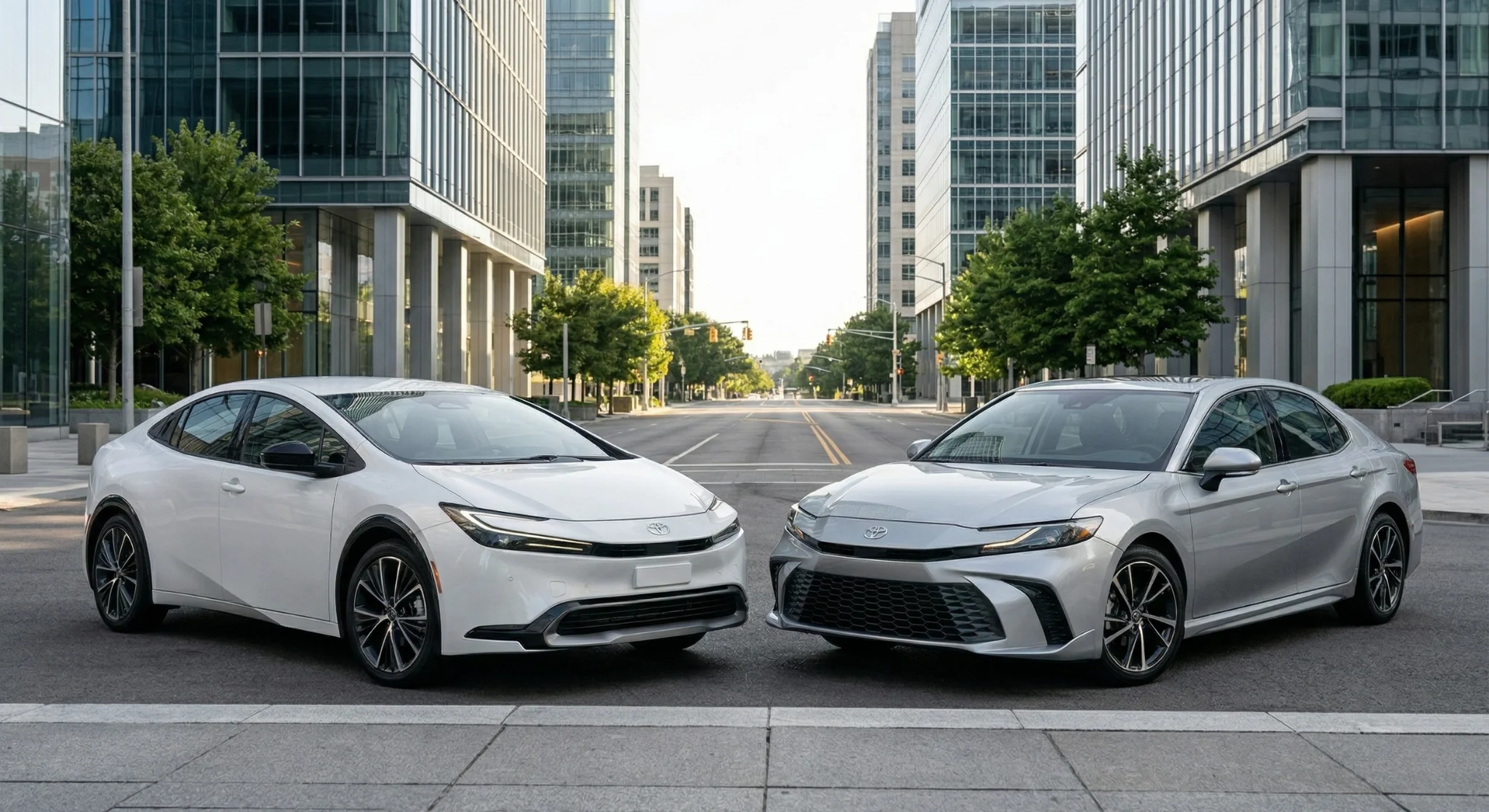
Across Los Angeles — from North Hollywood and Burbank to Studio City and Toluca Lake — a quiet shift is underway in 2026. Drivers who spent the last few years weighing fully electric vehicles are increasingly landing on hybrids instead, with Toyota's redesigned Camry Hybrid and 5th-generation Prius leading the move. The appeal is simple: serious fuel economy (up to 57 mpg combined), no charging logistics, and the flexibility to refuel in three minutes anywhere in the valley. For a city where a significant share of drivers live in apartments without dedicated Level 2 charging, and commute patterns span from Ventura Boulevard to the 405, that combination is winning converts every month.
This article breaks down what's driving the shift, what each of Toyota's flagship hybrids delivers in 2026, and why so many Angelenos are choosing "hybrid first" again.
The LA Charging Reality That's Changing Minds
Los Angeles has more public chargers than most US metros — but raw station count isn't the whole picture. The friction shows up in the details:
- Apartment and condo living. A large portion of LA drivers don't have a dedicated garage with a Level 2 hookup. Public charging becomes the primary option — and rates, availability, and queue times vary widely from neighborhood to neighborhood.
- At-home installation costs. Even for homeowners, a properly permitted Level 2 charger plus any required panel upgrade often runs $2,000–$5,000 before any utility or federal incentives.
- Freeway corridor gaps. Weekend trips to Palm Springs, Big Bear, or Santa Barbara still require planning around fast-charger availability and session times.
Hybrids sidestep all of it. The 2026 Camry Hybrid and Prius charge their own batteries through the engine and regenerative braking — so drivers refuel at any gas station and never think about kilowatts, plug types, or session fees. For commuters bouncing between Burbank studios, Studio City offices, and weekend escapes north on the 101, that flexibility is the entire point.
The 2026 Toyota Camry Hybrid: Hybrid-Only, By Design
Toyota's redesigned Camry went hybrid-only with its 2025 overhaul, and the 2026 model continues that formula. There's no longer a gas-only Camry — every trim pairs a 2.5L Dynamic Force four-cylinder with Toyota's latest hybrid system, delivering:
- 225 horsepower combined (front-wheel drive) or 232 horsepower with the available Electronic On-Demand All-Wheel Drive
- Up to 53 city / 50 highway / 51 combined mpg (LE FWD, per EPA estimates)
- Electronically controlled continuously variable transmission (eCVT) for smooth, efficient power delivery
- Regenerative braking that recovers energy during deceleration — a direct advantage in stop-and-go 405 traffic
The lineup — LE, SE, XLE, and XSE — covers the range from value-focused commuter to sport-styled trim, and AWD is available on every one. For Southern California's mix of coastal mornings, canyon roads, and occasional storms in the mountains, that traction option is worth considering.
Toyota Safety Sense 3.0 is standard across the entire 2026 Camry Hybrid lineup, bringing full-speed dynamic radar cruise control, lane tracing assist, pre-collision with pedestrian detection, and proactive driving assist. Higher trims add memory settings for seats and mirrors — useful for households where multiple drivers share the car.
The 2026 Toyota Prius: The Hybrid That Changed Everything, Reinvented
The 5th-generation Prius (launched for 2023 and continuing in 2026) is a dramatically different vehicle than the hatchback that defined the hybrid category for two decades. It's lower, sleeker, and noticeably more powerful — while still leading the segment in efficiency:
- 194 horsepower combined (FWD) or 196 horsepower with available AWD — nearly double the output of the original Prius
- Up to 57 city / 56 highway / 57 combined mpg (LE FWD, per EPA estimates) — the highest fuel economy of any non-plug-in hybrid in the Toyota lineup
- Available Electronic On-Demand All-Wheel Drive
- Electronically controlled continuously variable transmission (eCVT)
- Toyota Safety Sense 3.0 standard
The redesign addressed the Prius's biggest historical knock — that it was slow and utilitarian. The current generation handles closer to a sport sedan than an eco-appliance, with 0-60 mph in the 7-second range for FWD models. For LA drivers, that matters: the 2026 Prius is no longer a compromise between efficiency and driving experience.
For buyers who want plug-in capability without going fully electric, Prius Prime offers approximately 44 miles of all-electric range before the hybrid system takes over — effectively covering most LA commutes on electricity alone while retaining gas-tank flexibility for longer trips.
Between Camry Hybrid and Prius, the decision usually comes down to body style (sedan vs. hatchback), interior space needs, and whether Prius Prime's plug-in capability matches a particular commute pattern.
A Note on California HOV Access
California's Clean Air Vehicle (CAV) decal program — which allowed qualifying hybrids to use HOV/carpool lanes with a single occupant — expired on September 30, 2025, and federal authorization has not been renewed. For 2026, that means new hybrid purchases (including the Camry Hybrid and Prius) do not qualify for solo HOV access. Carpool lanes remain open to vehicles with two or more occupants, and certain zero-emission vehicles may still qualify under remaining state rules. Worth knowing — but for most drivers making the switch from EV to hybrid in 2026, the fuel savings and ownership flexibility outweigh the loss of a lane perk.
Ownership Advantages Toyota Hybrid Buyers Should Know
Beyond fuel savings, the 2026 Toyota hybrid lineup comes with some of the strongest ownership coverage in the segment:
- ToyotaCare covers factory-scheduled maintenance for 2 years or 25,000 miles at no additional charge
- Hybrid battery warranty runs 10 years or 150,000 miles — among the longest in the industry
- Reduced brake wear from regenerative braking, which offloads slowing work from the pads to the hybrid system, often extending brake service intervals
Combined, these factors often put total cost of ownership for a new Camry Hybrid or Prius below a comparable EV once charging equipment, installation, and electricity pricing are factored in — and well below a comparable non-hybrid sedan on fuel alone.
Explore the 2026 Hybrid Lineup at North Hollywood Toyota
The 2026 Camry Hybrid and Prius represent the practical side of the hybrid boom — proven technology, solid range, and no charging logistics to manage. Both are available now at North Hollywood Toyota, serving drivers across North Hollywood, Burbank, Studio City, Toluca Lake, Valley Village, Sun Valley, and Valley Glen.
Visit our showroom at 4606 Lankershim Blvd in North Hollywood, or call 818-369-3922 to schedule a test drive and see which Toyota hybrid fits your driving.