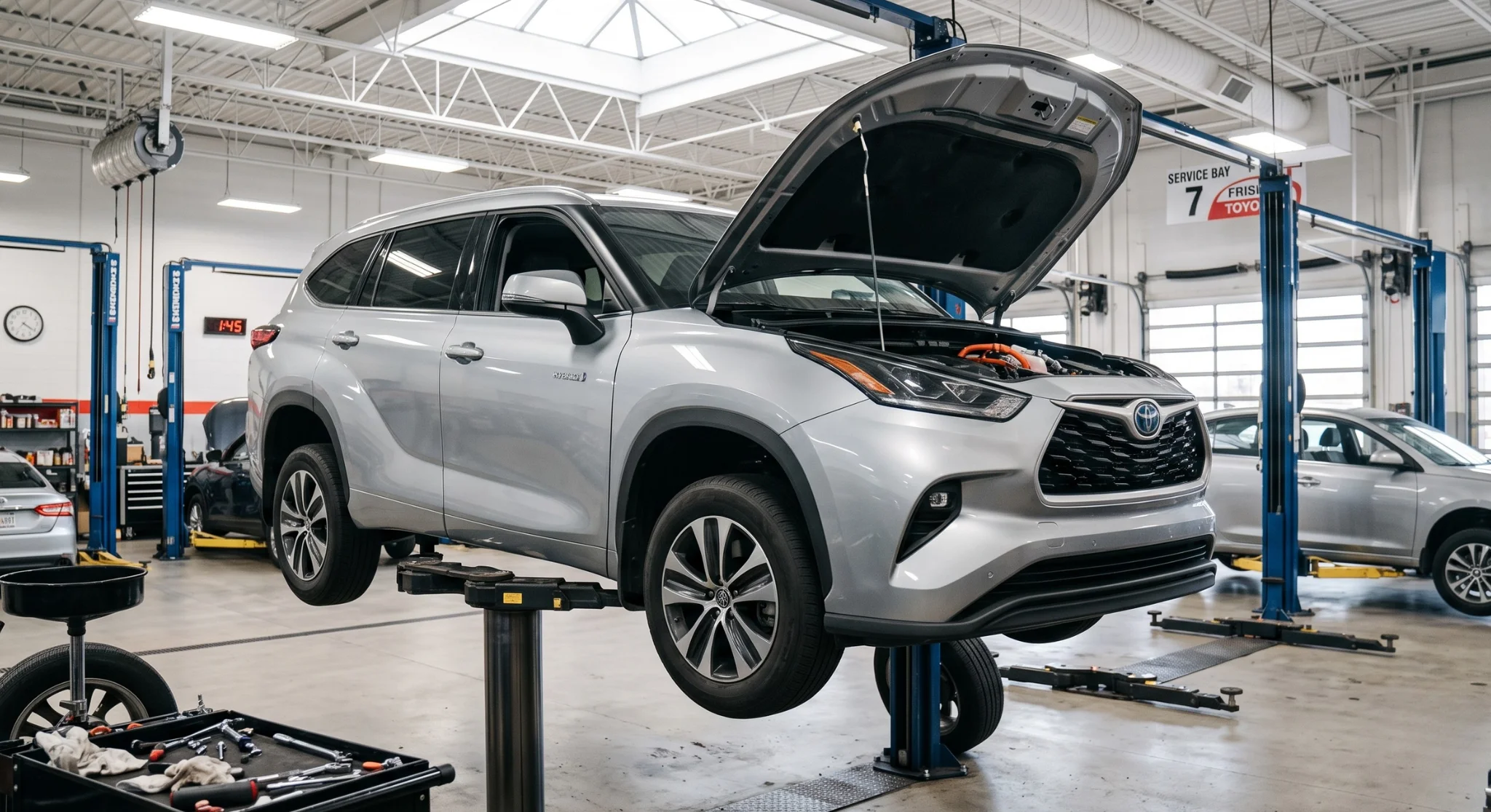
Toyota Hybrid Battery Warranty Explained
Toyota Hybrid Battery Warranty Explained
Toyota backs the most important part of its hybrid system, the high-voltage battery, with one of the longest warranties in the industry. For every Toyota hybrid, plug-in hybrid, fuel cell, and battery electric vehicle from the 2020 model year onward, the high-voltage battery is covered for 10 years or 150,000 miles, whichever comes first, according to Toyota's official electrified-vehicle warranty. This coverage applies nationwide. It is not limited to California or to states that follow California emissions standards. Earlier Toyota hybrids, generally those built before 2020, were covered at 8 years or 100,000 miles under the federal baseline. In California and other states that follow California emissions standards, models certified to the PZEV, AT-PZEV, or TZEV emissions standard often already carried 10-year/150,000-mile coverage on the traction battery under emissions rules, so the 2020 change made less of a difference for those buyers. Because that extended coverage depends on a vehicle's emissions certification rather than on where the owner lives, not every pre-2020 Toyota hybrid qualified. If you own a pre-2020 Toyota hybrid, confirm the exact terms for your model year and state of purchase.
How Toyota Hybrid Battery Coverage Works
What the warranty protects, and how it differs from your basic coverage
This protection applies specifically to the high-voltage traction battery, the large pack that powers the electric motors. It is separate from the standard 12-volt auxiliary battery. That smaller battery runs the starter and cabin electronics, and it falls under the shorter New Vehicle Limited Warranty. The high-voltage battery warranty covers defects in materials and factory workmanship. If a cell or module fails prematurely, the repair or replacement is covered.
Beyond the battery pack, other high-voltage components are covered under Toyota's Hybrid System Warranty for 8 years or 100,000 miles. This includes the hybrid battery control module, the hybrid control module, and the inverter with converter. Coverage transfers to every subsequent owner at no additional cost, for the remainder of the original time or mileage limit. That matters if you are buying a used Toyota hybrid.
Warranty Coverage at a Glance
| Coverage | Duration | What It Covers |
|---|---|---|
| High-Voltage Battery Warranty | 10 years / 150,000 miles (2020 model year and newer) | The high-voltage traction battery |
| Hybrid System Warranty | 8 years / 100,000 miles | Hybrid battery control module, hybrid control module, inverter with converter |
| Basic (New Vehicle Limited) Warranty | 3 years / 36,000 miles | Most vehicle components, including the 12-volt battery |
For Toyota hybrid, plug-in hybrid, fuel cell and battery electric vehicles beginning model year 2020, the hybrid (HV) battery is covered for 10 years from date of first use or 150,000 miles, whichever comes first. Coverage is subject to the terms and conditions of your New Vehicle Limited Warranty. See Owner's Warranty and Maintenance Guide for details. Date and mileage limitations refer to whichever comes first from the date of first purchase. Warranty coverage is subject to other terms and conditions. Refer to applicable Warranty and Maintenance Guide for full details.
Do Hybrids and Plug-In Hybrids Get the Same Battery Warranty?
Yes, and here is what that means for your traction battery
Toyota applies the same 10-year/150,000-mile high-voltage battery warranty to both standard hybrids and plug-in hybrids from the 2020 model year forward. Whether the traction battery is small or large, it receives the same factory protection.
The warranty language separates normal, gradual capacity loss from mechanical defects. Some slow decline is expected as any battery ages, and that gradual wear is not itself a defect. What the warranty protects against is a sudden, premature drop in performance or an outright cell failure that falls outside normal wear.
✓ Same Coverage, Both Powertrains
Standard hybrids and plug-in hybrids from 2020 and newer share the identical 10-year/150,000-mile high-voltage battery warranty.
Warning Codes That Signal a Failing Hybrid Battery
What your dashboard is telling you, and what it takes to diagnose it
The vehicle's onboard system constantly monitors voltage, temperature, and resistance across the battery's cell blocks. When the hybrid control module detects a reading outside factory tolerances, it stores a diagnostic trouble code, or DTC, and lights the master warning light.
The most definitive hybrid-battery code is P0A80, which means "Replace Hybrid Battery Pack." It sets when the system detects a voltage difference between battery blocks that exceeds the allowed threshold. When it appears, the vehicle often enters a reduced-power mode that leans on the gas engine to prevent further damage.
Other Common Hybrid Battery Codes
| Code | What It Means |
|---|---|
| P3006 | Voltage imbalance between the battery blocks, indicating one or more weak blocks |
| P0A7F | "Hybrid Battery Pack Deterioration," set when overall capacity has degraded past its limit |
| P0A1F | A fault in the battery control module, which may call for reprogramming or module replacement rather than a new battery pack |
Reading these codes correctly takes factory scan tools and live data. The fault may be a single weak cell, a corroded bus bar, or the control module itself. Our service department uses factory diagnostics to isolate the exact cause before recommending any warranty repair.
What Shortens Hybrid Battery Life, and How to Protect It
A few habits go a long way toward preserving your battery
Toyota's nickel-metal hydride and lithium-ion packs are engineered to last the life of the vehicle, but a few conditions can speed up aging.
Heat is the main enemy. Prolonged high temperatures raise the battery's internal temperature and accelerate chemical aging. Parking in shade or a garage helps. Toyota hybrids also draw cooling air for the battery through an intake vent, typically located in the rear of the cabin. Keep that vent clear of dust, pet hair, and cargo so airflow stays unobstructed.
Long periods of inactivity are the other common factor. Hybrid batteries stay healthiest when cycled regularly. A car parked for weeks can slowly self-discharge. Starting and driving the vehicle for 20 to 30 minutes about once a week lets the engine cycle energy back into the pack and keeps it at a healthy state of charge.
Refurbished vs. New OEM Hybrid Batteries
Weighing the trade-offs once your factory coverage ends
If your vehicle is out of warranty, you may face a choice between a remanufactured pack and a new Original Equipment Manufacturer, or OEM, battery. A lower upfront price is tempting, but the trade-offs matter.
Refurbished packs are usually built by testing old modules and swapping only the weakest cells for used cells from other packs. The remaining cells still carry years of wear. As a result, refurbished batteries often come with short warranties, frequently one to two years, and a higher chance of returning for service.
A new OEM battery uses entirely new cells, new bus bars, and current manufacturing specifications. It is backed by a manufacturer warranty that a third-party refurbisher cannot match. For many owners, that reliability is worth the higher cost.
Common Questions About Toyota Hybrid Battery Coverage
Quick answers to what owners ask most
Does the warranty cover gradual capacity loss over time?
The warranty covers defects in materials and workmanship, not the natural, gradual loss of capacity as a battery ages. However, if capacity drops below a defined threshold prematurely and within the warranty period, it may qualify for replacement under the New Vehicle Limited Warranty.
How can I check whether my used Toyota still has active battery coverage?
Bring your Vehicle Identification Number, or VIN, to our service team. We can look up the date of first use and confirm whether the vehicle is still within its time and mileage limits.
Is the hybrid battery covered under the 36-month basic warranty?
No. The high-voltage battery has its own, much longer coverage. The Basic New Vehicle Limited Warranty covers most components for 3 years or 36,000 miles, while the high-voltage battery is covered for up to 10 years or 150,000 miles.
Expert Hybrid Service at North Hollywood Toyota
Specialized care for standard and plug-in hybrids
Servicing a hybrid's high-voltage system takes specialized training, diagnostic software, and the right tools. Our factory-certified technicians handle everything from hybrid cooling-system service to high-voltage diagnostics on both standard and plug-in hybrids.
If you have noticed a drop in hybrid performance or a warning light, do not wait to have it checked. We can run a battery health check, pull any stored codes, and confirm whether your vehicle qualifies for a warranty-covered repair. You can also review our current hybrid service specials before your visit.
Protect Your Toyota Hybrid Investment
Our factory-certified technicians can run a battery health check, pull stored codes, and confirm your remaining warranty coverage.
Visit our service center at 4606 Lankershim Blvd, North Hollywood, CA 91602.
Disclosures
For Toyota hybrid, plug-in hybrid, fuel cell and battery electric vehicles beginning model year 2020, the hybrid (HV) battery is covered for 10 years from date of first use or 150,000 miles, whichever comes first. Coverage is subject to the terms and conditions of your New Vehicle Limited Warranty. See Owner's Warranty and Maintenance Guide for details. Date and mileage limitations refer to whichever comes first from the date of first purchase. Warranty coverage is subject to other terms and conditions. Refer to applicable Warranty and Maintenance Guide for full details.