Toyota Check Engine Light: What It Means and What to Do
Toyota Check Engine Light: What It Means and What to Do
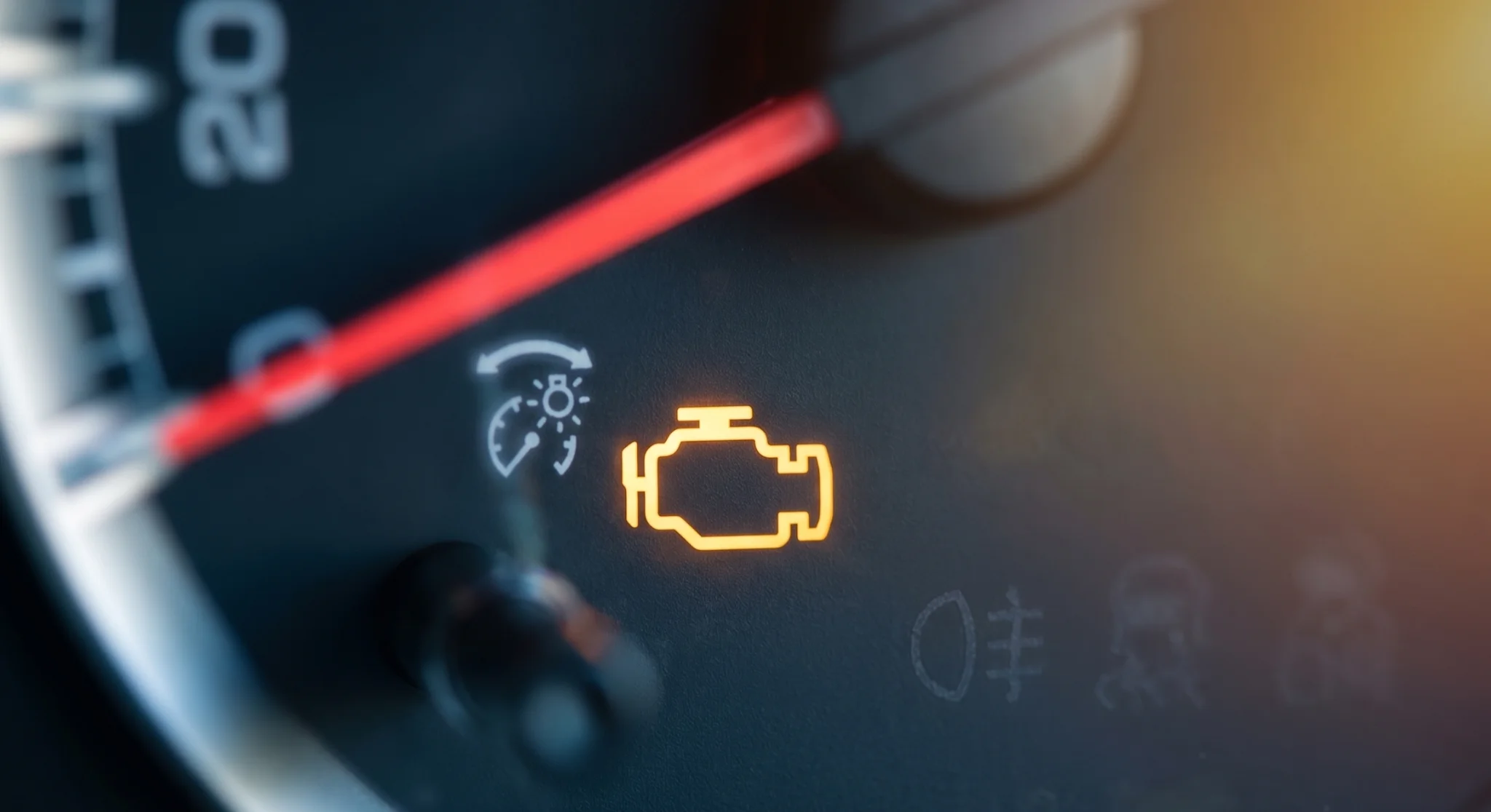
Your Toyota check engine light is one of the most important warnings on the instrument panel. Some dashboard symbols point to simple convenience functions. Others demand immediate attention. The engine warning symbol sits firmly in that second group. If it begins to flash rapidly while you drive, your vehicle is signaling an urgent mechanical problem.
A blinking check engine light on a Toyota means an active, severe engine misfire. During a misfire, raw, unburned fuel escapes the combustion chamber and travels into the exhaust. That fuel can ignite inside the catalytic converter, causing temperatures to spike. Within minutes of driving this way, the heat can melt the converter's internal structure and destroy it.
Ignoring a flashing light can turn a simple ignition issue into an expensive repair. Replacing a ruined catalytic converter typically costs between $1,000 and $2,500. A severe misfire can also cause sudden stalling, a loss of acceleration, or a thermal event under the vehicle.
If the light flashes, reduce your speed, pull over safely, and turn off the ignition. To protect your powertrain, do not keep driving. Arrange to have the vehicle transported to a certified repair facility instead. Our team can help you coordinate transport or talk through your symptoms — reach out using the buttons above, or connect with our service department directly.
⚠ Flashing light? Stop driving.
A flashing check engine light means an active misfire is damaging your catalytic converter right now. Pull over safely, shut off the engine, and arrange a tow rather than driving further.
In this guide
- Can you safely drive your Toyota with a solid warning light?
- The most common causes of an illuminated Toyota check engine light
- How long after tightening the gas cap will the warning light clear?
- How to read diagnostic trouble codes on your Toyota
- Common questions about Toyota diagnostic warning lights
- When to choose same-day professional diagnostics at North Hollywood Toyota
Can You Safely Drive Your Toyota with a Solid Warning Light?
A steady light is a "check soon" signal — not a roadside emergency.
A solid, non-flashing check engine light means the engine control module has found a fault outside normal operating parameters. The good news: the issue is not actively destroying your exhaust or engine in real time. When the light stays steady, the computer has logged a diagnostic trouble code tied to emissions, fuel management, or sensor performance. You don't need a roadside rescue — but you do need professional attention soon.
You can generally keep driving with a solid check engine light for a short time, as long as the vehicle behaves normally. If the idle is smooth, the transmission shifts correctly, and there are no unusual noises or smells, it's usually safe to drive home or to a service center. Still, putting off a diagnosis indefinitely is a risky strategy.
A minor sensor fault left unaddressed can slowly reduce your fuel economy, speed up wear on ignition parts, or trigger a second, more serious failure later. For example, if a faulty oxygen sensor or mass airflow sensor goes unresolved, the engine may switch to a protective "limp mode" or a richer fuel mixture. That protective state can dull performance and cut efficiency. What started as a small sensor replacement can grow into a much larger repair.
The Most Common Causes of an Illuminated Toyota Check Engine Light
Most warning lights trace back to a predictable group of culprits.
The onboard diagnostic system watches dozens of sensors, valves, and electrical circuits at once. When a fault appears, it is rarely a mystery to a trained technician. Most warning lights trace back to a handful of common culprits. Knowing these typical failure points helps you understand what your vehicle may be experiencing before you reach the service bay.
Common culprits behind a check engine light
- Faulty oxygen sensors: These sensors measure unburned oxygen in the exhaust so the computer can fine-tune the air-fuel mixture. Heat and combustion byproducts wear them down over time. A failing sensor sends bad data to the computer, which hurts fuel economy and can eventually damage your spark plugs or catalytic converter.
- Worn spark plugs and ignition coils: Your ignition system must deliver a strong, well-timed spark to light the fuel mixture. When a spark plug wears out or an ignition coil fails, the cylinder misfires. This is a leading cause of both solid and flashing lights, often paired with a rough idle or hesitation under load.
- Evaporative emissions (EVAP) system leaks: The EVAP system captures fuel vapors from the gas tank and routes them into the engine to be burned instead of escaping into the air. A cracked vacuum hose, a stuck purge valve, or a leaking charcoal canister will set an EVAP fault code.
- Failing catalytic converter: The converter turns harmful emissions into safer gases. It can fail from age or from unresolved engine misfires. Once its efficiency drops below a set threshold, the system turns on the warning light.
How Long After Tightening the Gas Cap Will the Warning Light Clear?
A loose cap is one of the most common — and cheapest — triggers.
A loose, cracked, or poorly tightened gas cap is one of the most common reasons for a solid check engine light. The fuel cap is a key part of the sealed EVAP system. If the cap isn't turned until it clicks, or if its rubber gasket is cracked and dry, the system detects a pressure drop. The computer reads that as a fuel-vapor leak and turns on the warning light.
If you suspect a loose cap, the fix is simple. Pull over somewhere safe, remove the cap, and check the rubber seal for cracks or debris. Reinstall it and turn it clockwise until you hear it click at least once.
Once the cap is secure, the light won't turn off right away. The computer has to run a series of self-tests, called readiness monitors, to confirm the EVAP system is sealed again. To finish these monitors, the vehicle usually needs to be driven under specific conditions:
- The fuel tank should be between one-quarter and three-quarters full.
- The vehicle should sit overnight so the engine can cool completely.
- You should complete a drive cycle that mixes stop-and-go city driving with steady highway cruising — roughly 20 to 30 miles.
If the gas cap was the only issue, the computer usually clears the code and turns off the light after two or three successful drive cycles. If the light stays on after several days of normal driving, the system has found a different fault, or there's a deeper EVAP leak that needs professional inspection.
How to Read Diagnostic Trouble Codes on Your Toyota
A code tells you where to look — not the whole story.
When your check engine light comes on, you don't have to stay in the dark. Every modern vehicle has an On-Board Diagnostics (OBD-II) port that lets you read the specific trouble codes stored in the computer's memory. Reading these codes yourself gives you useful context before you talk with a service advisor.
To read codes at home, you'll need a handheld OBD-II scan tool or a wireless Bluetooth adapter that pairs with a smartphone app. Both are sold online and at auto parts stores. The diagnostic port is a trapezoidal 16-pin connector under the driver's-side dashboard, usually near the steering column. With the engine off, plug in the scanner, turn the ignition to "On" without starting the engine, and select "Read Codes."
The scanner shows a five-character code, such as P0420 or P0171. The letter "P" indicates a powertrain code, and the numbers point to the system involved. For example, codes in the P03xx range point to ignition or misfire problems, while P04xx codes point to auxiliary emissions controls.
A code tells you which system is reporting an issue — but it's a starting point for diagnosis, not a final answer. A lean-mixture code, for instance, tells you there is too much air in the combustion process. It cannot tell you whether the cause is a dirty mass airflow sensor, a vacuum leak, or a failing fuel pump. A technician still has to run targeted physical testing to isolate and replace the correct part.
Common Questions About Toyota Diagnostic Warning Lights
Quick answers to the questions drivers ask most.
Can an auto parts store turn off my check engine light after scanning it?
Availability varies by state. Where free code scans are offered, employees generally cannot clear or reset your warning light for you. In California, drivers usually rely on a licensed repair facility or dealership to read and clear codes. Either way, clearing a code without fixing the underlying fault is only temporary — the computer will turn the light back on once it completes its next self-test. The light should only be cleared after the physical repair is finished.
Does my Toyota hybrid have a different check engine light system?
Toyota hybrids use the same standard check engine light symbol as gas vehicles. The difference is that the computer network also monitors the high-voltage battery, electric motors, and hybrid inverter. If a fault occurs in the hybrid drive system, the check engine light may appear alongside a master warning indicator or a hybrid system warning message on the multi-information display.
Will a check engine light cause my vehicle to fail an emissions test?
Yes. An active check engine light is an automatic failure during state emissions inspections. In California, the Bureau of Automotive Repair treats any illuminated light as an automatic Smog Check failure. Even if you clear the codes right before the test, the inspection equipment will detect that the readiness monitors haven't finished their self-tests. That results in a rejected inspection until the vehicle is driven and repaired.
Is the check engine light covered under my vehicle's warranty?
It depends on your vehicle's age, mileage, and which component failed. Toyota's New Vehicle Limited Warranty provides basic coverage for 36 months/36,000 miles and powertrain coverage for 60 months/60,000 miles, while emissions coverage varies under federal and California regulations. Major emissions components — such as the catalytic converter and the emissions control computer — are often covered under long-term federal emissions warranties, and some faults may fall under your basic (bumper-to-bumper) or powertrain coverage. For the terms that apply to your vehicle, see Toyota's official Warranty & Maintenance Guide.
Emissions coverage varies under Federal and California regulations. For complete details about Toyota's warranties, please refer to the applicable Warranty & Maintenance Guide or see your Toyota dealer.
When to Choose Same-Day Professional Diagnostics at North Hollywood Toyota
Some warning signs shouldn't wait for the weekend.
Some automotive issues can wait for a convenient weekend appointment. Others need immediate attention. If your dashboard light is flashing, if the engine is stumbling under acceleration, or if you notice a strong smell of fuel or hot metal, seek professional diagnostics right away. Our factory-trained technicians have the equipment and brand-specific expertise to pinpoint complex electrical and mechanical faults quickly, saving you time and preventing unnecessary parts replacement.
During a professional diagnostic visit, our team does more than read the stored code and swap parts. We perform electrical circuit testing, vacuum pressure checks, and live-data analysis to confirm exactly why the sensor triggered the code. This approach helps ensure the repair is done right the first time, protecting the performance, safety, and longevity of your vehicle.
🔧 Heading in for a smog inspection?
An active check engine light is an automatic emissions-test failure. It's worth resolving the underlying fault before your inspection appointment, not after a rejection.
Don't Let a Warning Light Become an Expensive Repair
If your dashboard is telling you it's time for an inspection, our North Hollywood Toyota service team is ready to diagnose the cause and get you back on the road with confidence.
Visit us at 4606 Lankershim Blvd, North Hollywood, CA 91602
Disclosures
Emissions coverage varies under Federal and California regulations. For complete details about Toyota's warranties, please refer to the applicable Warranty & Maintenance Guide or see your Toyota dealer.