Do I Have to Use My Insurance Company's Body Shop? (California Rules)
Do I Have to Use My Insurance Company's Body Shop? (California Rules)
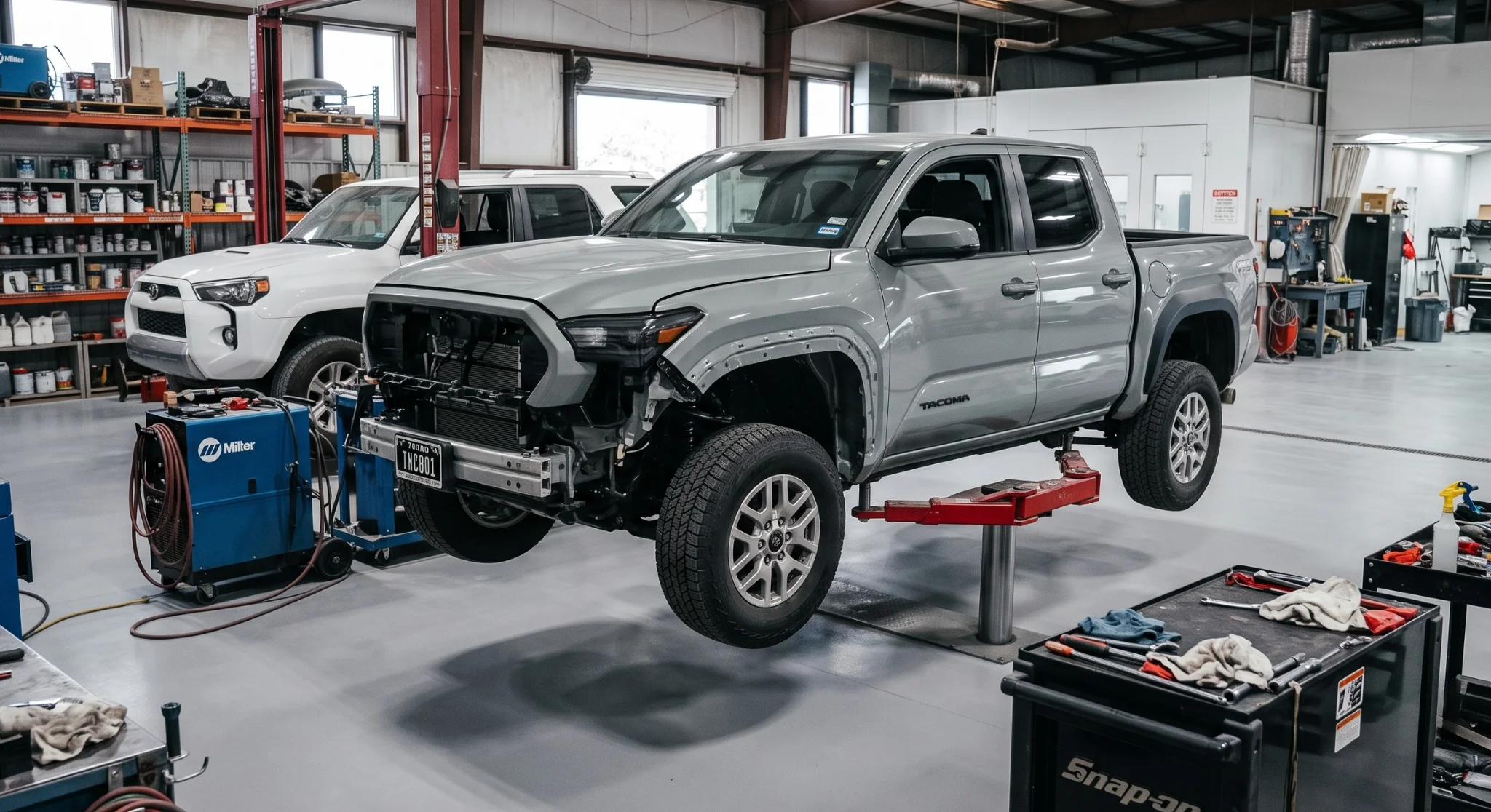
No — in California, you are not required to use your insurance company's body shop. A collision is stressful, and the claims process can feel overwhelming. Many drivers aren't sure of their rights. But the rule is simple. Under California Insurance Code Section 758.5, you have the right to pick the licensed auto body shop you want. Your insurer can recommend a shop. It cannot require you to use its preferred shop, and it cannot penalize you for going to an independent repair center.
This anti-steering law protects your right to choose. It also keeps competition fair among repair shops. Some insurers may still steer you toward their network shops to control costs. The choice is still yours. If you want factory-trained technicians who know your make and model, you are fully entitled to pick them.
Choose an independent or dealership shop, and your insurer must still pay the reasonable cost of repairs. That means restoring your vehicle to its pre-accident condition. It cannot cut your coverage or delay your claim just because you skipped its recommended shop.
Dealing with collision damage and want factory-standard repairs? Our collision center can walk you through your options.
⚖ Your Right in One Line
In California, your insurer can recommend a body shop but cannot require you to use it — the choice is yours (Insurance Code §758.5).
When Must Your Insurer Provide the Auto Body Repair Consumer Bill of Rights?
Understanding the disclosure that protects your repair choices.
California law requires your insurer to give you a copy of the Auto Body Repair Consumer Bill of Rights. It can do this at any of three points: when you apply for a policy, when the policy is issued, or after you report an accident or loss. If you already received the document at application or issuance, the insurer doesn't have to send it again at claim time. If it provides the document after a loss, it must give it to the insured filing the claim. It can also send the document electronically.
The document spells out your rights on shop selection, repair estimates, and parts identification. It is a safeguard against insurance steering. In short, you control how your vehicle is repaired.
Any auto body shop in California must also follow the rules set by the Bureau of Automotive Repair. Before work begins, the shop must give you an itemized written estimate for parts and labor. It must also get your authorization before starting the job — in writing, orally, or electronically (such as by email).
Direct Repair Programs vs. Independent Shops: Are DRP Repairs Guaranteed?
How network shops compare to a factory-certified repair center.
When you file a claim, your adjuster will likely mention their Direct Repair Program (DRP) shops. These are body shops with pre-set agreements with the insurer. The agreements cover labor rates, parts sourcing, and repair steps. DRP shops streamline the paperwork. Still, it helps to know how they compare with an independent or factory-certified shop.
Choosing an independent or factory-certified shop doesn't mean going without a warranty. Reputable non-DRP shops offer their own written warranties on workmanship and paint. These often match or beat insurance-backed guarantees. The difference is emphasis. A factory-certified shop restores your vehicle to brand-specific standards. A DRP shop works under the insurer's cost-containment guidelines.
DRP Shop vs. Independent / Factory-Certified Shop
| Consideration | DRP (insurer-network) shop | Independent / factory-certified shop |
|---|---|---|
| Workmanship warranty | Insurer typically backs a workmanship guarantee, often for as long as you own the vehicle | Shop provides its own written warranty on workmanship and paint, often matching or exceeding DRP terms |
| Repair priority | Structured around the insurer's cost-containment guidelines | Focused on brand-specific, factory repair standards |
| Administrative process | Streamlined through the insurer's pre-set agreements | Shop works with your carrier on estimates and supplements |
The Truth About Aftermarket Parts and California Repair Estimates
What the rules say about OEM, aftermarket, and recycled parts.
One common friction point is the type of parts used. Many drivers expect original equipment manufacturer (OEM) parts only. But California rules let insurers write estimates using aftermarket, recycled, or reconditioned parts.
The rules differ by part type. For a non-OEM aftermarket crash part, the insurer must warrant that it is at least equal to the original in kind, quality, safety, fit, and performance. That part must also be identified on the estimate. Used, recycled, and reconditioned parts fall under a separate rule: the estimate and invoice must clearly identify each part as new, used, aftermarket, reconditioned, or rebuilt.
You have the right to ask for your replaced parts back, too — but you must request that when you authorize the repair. You can also request OEM parts. If your policy doesn't fully cover them, you can pay the price difference. At North Hollywood Toyota, our collision center repairs your vehicle with genuine OEM parts — no aftermarket substitutes.
What to Do If an Adjuster Pressures You Toward Their Preferred Shop
How to hold your ground and protect your claim.
Even with clear legal protections, some adjusters use pressure tactics. They might claim an independent shop will delay the claim, that they can't guarantee the work, or that you'll owe extra storage fees.
If this happens, stay calm and assert your rights under Section 758.5. Tell the adjuster you know you can choose your own shop. Then ask for all shop recommendations and repair authorizations in writing.
☎ Put It in Writing
Ask that all shop recommendations and repair authorizations be provided in writing. Adjusters tend to be far more careful once there's a paper trail.
Does the insurer keep pushing, or claim your coverage drops if you use an independent shop? You can file a complaint with the California Department of Insurance. It investigates unfair claims practices and anti-steering violations. Write down the dates, times, and exact statements your adjuster makes. That record is your evidence.
How Insurers Calculate "Reasonable" Repair Costs — and How to Handle Disputes
Your options when the insurer's estimate falls short.
When you choose your own shop, the insurer must pay the reasonable cost of repairs. To set that figure, insurers weigh local labor rates, parts pricing, and standard repair steps. They compare your shop's estimate against their local market data.
Disputes come up when your shop's labor rate or method differs from the insurer's guidelines. For example, a factory-certified technician may require specific diagnostic scans or calibrations. The insurer's estimating software may not include those by default. If your insurer won't pay the full estimate, you have several options:
- Request a detailed breakdown — ask the insurer for a written explanation citing the specific reasons, policy exclusions, or market data behind the disputed rate.
- Initiate a joint review — have your body shop manager speak directly with the adjuster to explain the technical necessity of specific steps, such as structural alignments or safety-sensor calibrations.
- Escalate the claim — request a supervisor review, or, if your policy includes an appraisal clause, invoke it to resolve the amount-of-loss dispute through an independent, third-party process.
Under the California Fair Claims Settlement Practices Regulations, insurers must promptly pay all undisputed amounts. They cannot hold your entire repair payment while you negotiate the disputed portion.
Quick Answers About California Auto Repair Laws and Insurance Claims
Fast answers to the questions drivers ask most.
Can an insurance company force me to use a specific body shop in California?
No. California Insurance Code Section 758.5 prohibits insurers from requiring you to use a specific repair shop. You have the legal right to select any licensed auto body repair facility.
What should I do if my insurer's estimate is lower than my shop's estimate?
Ask your repair shop to contact the adjuster directly and submit a supplement. Shops routinely resolve these gaps by providing photos, manufacturer repair guidelines, and diagnostic reports to show the additional costs are necessary.
Can I insist on OEM parts for my collision repair?
You can request OEM parts. California allows insurers to write estimates using aftermarket or recycled parts, and any non-OEM aftermarket crash part must be at least equal to the original in kind, quality, safety, fit, and performance. If you insist on OEM parts and your policy doesn't specifically cover them, you may have to pay the difference.
What happens if a shop finds more damage after starting repairs?
Under Bureau of Automotive Repair rules, the shop must stop and get your authorization for the additional repairs before proceeding. It will typically submit a supplemental estimate to your insurer for payment approval at the same time.
Protect Your Vehicle Investment with Certified Repairs at North Hollywood Toyota
Factory-informed repairs that protect safety and resale value.
Structural or cosmetic repairs call for a shop that understands your vehicle's engineering. That is the best way to protect your investment. At North Hollywood Toyota, our service department uses advanced diagnostic equipment and specialized tools. The goal is to restore your vehicle to its factory specifications.
Our team works directly with major insurance carriers to speed up estimates and approvals. That helps you avoid delays. We push for proper repair procedures and high-quality parts. The aim is to protect your vehicle's structure, safety systems, and resale value.
Dealing with the aftermath of an accident? Let our advisors guide you through the repair process. Give us a call to talk through your needs, or visit our North Hollywood service center for an in-person assessment.
Certified Collision Repair at North Hollywood Toyota
Know your rights, then trust your repair to a team that restores your Toyota to factory standards.
Visit us at 4606 Lankershim Blvd, North Hollywood, CA 91602.
Disclosures
This information is provided for general educational purposes only and does not constitute legal advice. Warranty coverage depends on the specific terms of your vehicle's warranty agreement. Consult your owner's manual or a qualified legal professional for guidance on your individual situation.