2026 Toyota Prius Plug-in Hybrid: Engine Specs and Performance Explained
2026 Toyota Prius Plug-in Hybrid: Engine Specs and Performance Explained
Shoppers researching the 2026 Toyota Prius Plug-in Hybrid usually arrive with the same set of questions: what's actually under the hood, how fast is it, and how does it perform day-to-day? This page covers the full powertrain story — engine and motor architecture, the three selectable drive modes, real-world acceleration, and the EV range and charging numbers that determine how often you'll actually visit a gas station.
If you're shopping the Prius Plug-in Hybrid in North Hollywood, Burbank, Studio City, or Toluca Lake, here's what matters under the hood.
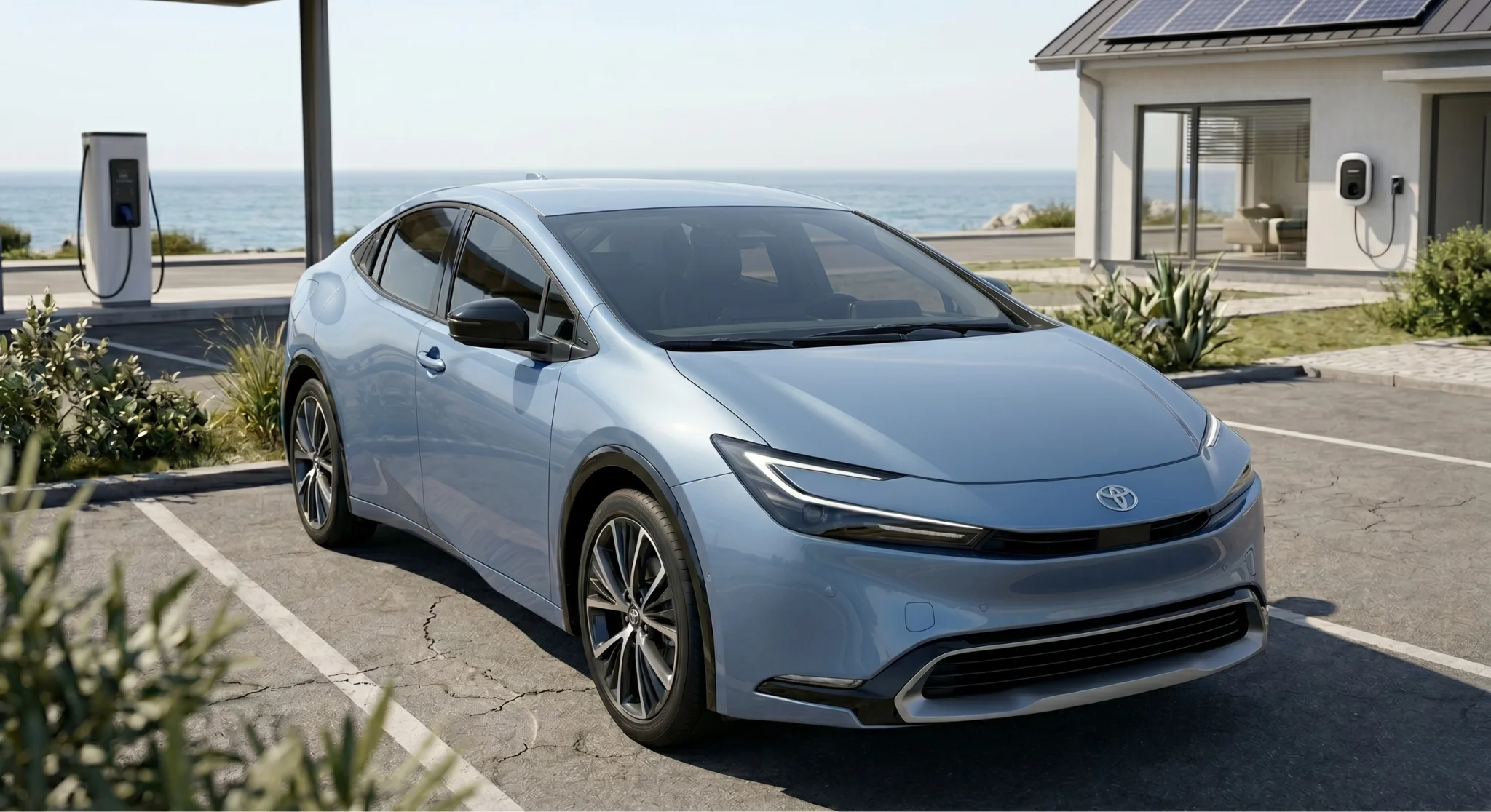
The 2026 Prius Plug-in Hybrid Powertrain Explained
The 2026 Toyota Prius Plug-in Hybrid is built on Toyota's fifth-generation Toyota Hybrid System, pairing a 2.0-liter four-cylinder gasoline engine (Toyota internal code M20A-FXS) with two motor-generators and a 13.6-kWh lithium-ion battery pack. All four trims share the same powertrain, the same battery, and the same combined output.
Powertrain Quick Reference
| Engine | 2.0L Dynamic Force inline-4 (Atkinson cycle) — Toyota M20A-FXS |
| Engine Output (Standalone) | 150 horsepower / 139 lb-ft of torque |
| Hybrid System | Fifth-generation Toyota Hybrid System |
| Electric Motors | Two motor-generators (MG1 + MG2) |
| Battery | 13.6-kWh lithium-ion |
| Transmission | Planetary-type continuously variable transmission (CVT) |
| Drivetrain | Front-wheel drive (all trims) |
| Combined System Output | 220 net horsepower |
| 0-60 mph (Auto Mode) | Approximately 6.6 seconds |
How the Pieces Work Together
- Engine. A 2.0L Dynamic Force inline-four running the Atkinson cycle, with dual overhead camshafts and variable valve timing. On its own, the engine produces 150 horsepower and 139 lb-ft of torque.
- Electric motors. Two motor-generators — Toyota calls them MG1 and MG2. MG2 is the primary drive motor for the front wheels; MG1 manages power flow between the engine, the battery, and the wheels through the planetary-type continuously variable transmission.
- Battery. A 13.6-kWh lithium-ion pack, rechargeable from a standard household outlet or a Level 2 home charger.
- Combined system output. 220 net horsepower — the most powerful Prius Toyota has ever built.
- Drivetrain. Front-wheel drive on every trim. (The standard 2026 Prius hybrid offers AWD; the Plug-in Hybrid does not.)
That 220-horsepower number is what separates this car from earlier Prius generations and from most plug-in hybrid competitors. A 0-60 mph run takes roughly 6.6 seconds with the gas engine assisting — quicker than many compact crossovers and well outside the "slow hybrid" stereotype the older Prius earned.
The Three Driving Modes
All four 2026 Prius Plug-in Hybrid trims share the same 220-horsepower powertrain — there's one engine across the lineup, not a menu of upgrade options. What the system does give you control over is how that powertrain operates day-to-day, through three selectable driving modes that change the balance between gasoline and electric power.
| Drive Mode | Power Source | When to Use | Performance Note |
|---|---|---|---|
| EV Mode | Battery only — no gasoline | Daily commutes within EV range | Brisk acceleration in town; ~11 sec 0-60 mph |
| Auto EV/HV Mode | Primarily battery; gas engine assists on demand | Mixed driving with occasional power demands — steep grades, freeway merges | System decides automatically when to call on the engine |
| Hybrid Mode | Automatic gas + electric blending | Long trips, or preserving EV range for later city driving | Operates as a standard Prius hybrid; ~6.6 sec 0-60 mph |
For a North Hollywood commuter charging at home overnight, the typical pattern is straightforward: leave home in EV Mode, run errands or commute on electricity alone, then let the system switch automatically to hybrid operation when the battery runs low. The efficiency numbers shoppers care about depend on which trim they choose, and those vary meaningfully across the lineup.
Performance and Driving Dynamics
The previous-generation Prius could be described many ways — "fast" was not one of them. The fifth-generation Prius platform fundamentally changed that, and the Plug-in Hybrid version is the high-output member of the family. At 220 net combined horsepower, it produces 26 more horsepower than the standard 2026 Prius hybrid in front-wheel-drive form, and it's the most powerful Prius Toyota has ever sold.
0-60 mph by Driving Configuration
| Driving Configuration | Approximate 0-60 mph Time | Notes |
|---|---|---|
| EV Mode (battery only) | ~11 seconds | Gas engine doesn't contribute; brisk in town, slower at highway speeds |
| Auto EV/HV Mode (full system) | ~6.6 seconds | Gas engine assists under hard acceleration; the headline performance number |
| 2026 Toyota Prius (standard hybrid, FWD — for comparison) | ~7.1 - 7.7 seconds | 194 hp combined output; for cross-shoppers considering the non-PHEV Prius |
How the Power Gets to the Wheels
The Prius Plug-in Hybrid uses a planetary-gear power-split device — the same architecture Toyota has refined across more than two decades of hybrid development — paired with a continuously variable transmission. There are no traditional shift points. Acceleration feels linear and uninterrupted, with immediate electric torque off the line and the gas engine smoothly joining the conversation as demand increases.
Real-world driving notes:
- Stoplight launches. Brisk and quiet — MG2 delivers full electric torque instantly while the gas engine is still warming up.
- Freeway merging. Solid passing power when both engine and motors contribute — easily handles 134 or 101 entrance ramps in Auto EV/HV mode.
- Highway cruising. The system settles into whichever combination is most efficient for the speed; engine RPM stays low and cabin noise stays reasonable.
Ride, Handling, and Steering
The fifth-gen Prius chassis was tuned to match the more aggressive powertrain. Independent reviewers have consistently described the driving character as "surprisingly fun" — words rarely associated with prior Prius generations. Common themes from third-party tests: responsive (if lightly weighted) steering, a cushioned but composed ride, and reassuring stopping power from the regenerative braking system. The low center of gravity from the underfloor battery placement helps keep body roll in check on curving routes — useful on Cahuenga Pass on-ramps or canyon roads above Burbank and Studio City.
EV Range, MPGe, and MPG by Trim
Toyota publishes two separate range figures for the Prius Plug-in Hybrid: how far it goes on electricity alone, and how efficiently it runs on gasoline after the battery is used up. The SE trim is significantly more efficient than the upper trims, primarily because of its smaller 17-inch wheels and lower curb weight.
| Trim | EPA-Estimated EV Range | EPA-Estimated MPGe (Combined) | EPA-Estimated MPG (Combined, Hybrid Mode) |
|---|---|---|---|
| SE | 44 miles | 127 MPGe | 52 mpg |
| XSE | 40 miles | 114 MPGe | 48 mpg |
| Nightshade Edition | 40 miles | 114 MPGe | 48 mpg |
| XSE Premium | 40 miles | 114 MPGe | 48 mpg |
EPA-Estimated EV range and fuel economy figures per Toyota and EPA testing. Actual range and mileage vary based on driving conditions, vehicle condition, accessory usage, and other factors.
In real-world terms, the SE can cover most daily commutes in the San Fernando Valley on electricity alone — drivers in Burbank, Studio City, or Valley Village who plug in at home each night can often go a week or longer between gas station visits. Drive farther than the EV range supports, and the Prius Plug-in Hybrid behaves like a standard Prius hybrid, with a combined range of approximately 550 to 600 miles between fill-ups depending on trim.
Charging the Prius Plug-in Hybrid at Home
The 13.6-kWh battery charges in two ways, and there is no DC fast-charging port on this model — it's designed for overnight home charging rather than public fast-charging stops.
- Standard 120-volt household outlet. Approximately 11 hours for a full charge. This is the "plug it in when you get home, drive in the morning" use case.
- Level 2 240-volt outlet or charging equipment. Approximately 4 hours for a full charge. Many San Fernando Valley homes already have a 240V outlet (for a dryer or older EV setup) that can be adapted.
- Available 185-watt solar roof (XSE Premium). A roof-integrated solar charging system that supplies supplemental power to the battery when parked in sunlight and runs auxiliary systems while driving. Toyota estimates approximately six miles of added EV range per day in full sun. It won't replace the wall outlet, but in Southern California sunshine it earns its keep.
Frequently Asked Questions
How fast is the 2026 Toyota Prius Plug-in Hybrid?
The 2026 Toyota Prius Plug-in Hybrid produces 220 net combined horsepower — the most powerful Prius Toyota has ever built — and accelerates from 0 to 60 mph in approximately 6.6 seconds in Auto EV/HV Mode. That's measurably quicker than the standard 2026 Prius hybrid, which produces 194 horsepower in front-wheel-drive form and runs to 60 in roughly 7.1 to 7.7 seconds.
What engine is in the 2026 Toyota Prius Plug-in Hybrid?
A 2.0-liter four-cylinder Atkinson-cycle gasoline engine (Toyota's M20A-FXS) paired with two electric motors and a 13.6-kWh lithium-ion battery. Combined output is 220 horsepower, sent to the front wheels through a planetary-type continuously variable transmission.
How long does it take to charge a 2026 Prius Plug-in Hybrid?
Approximately 11 hours on a standard 120-volt household outlet, or approximately 4 hours on a Level 2 240-volt charger. The vehicle does not support DC fast charging — it's engineered for overnight home charging.
How far can the 2026 Prius Plug-in Hybrid drive on electricity alone?
The SE trim has an EPA-estimated 44-mile all-electric range. The XSE, Nightshade Edition, and XSE Premium trims have an EPA-estimated 40-mile all-electric range. Once the battery is depleted, the vehicle continues running as a standard hybrid — no recharging stop required.
What's the difference between EV Mode, Auto EV/HV Mode, and Hybrid Mode?
EV Mode uses only the battery and electric motors. Auto EV/HV primarily uses the battery but lets the gas engine assist when needed for power or hills. Hybrid Mode runs the system as a standard hybrid, automatically blending engine and electric power for maximum efficiency.
Test Drive the 2026 Prius Plug-in Hybrid at North Hollywood Toyota
Specs are useful — but the way the 2026 Prius Plug-in Hybrid drives, especially with 220 horsepower under your right foot, is the part that's hard to communicate on a page. We'd rather show you.
You'll find North Hollywood Toyota at 4606 Lankershim Blvd in North Hollywood, serving Toluca Lake, Valley Village, Burbank, Studio City, Sun Valley, and Valley Glen. Call us at 818-369-3922 with any questions about the Prius Plug-in Hybrid lineup, charging at home, or how trim choice affects EV range and fuel economy.