Hardwired vs. Plug-In EV Charger: What's Right for Your Home?
Hardwired vs. Plug-In EV Charger: What's Right for Your Home?
Installing a Level 2 charger at home is one of the first big decisions new EV and plug-in hybrid owners face, and it usually comes down to two options: a permanent hardwired unit or a plug-in charger connected to a NEMA 14-50 outlet. Both are safe, both are proven, and both can deliver a full overnight charge. The right choice depends on your vehicle, your home's electrical system, and how long you plan to stay put.
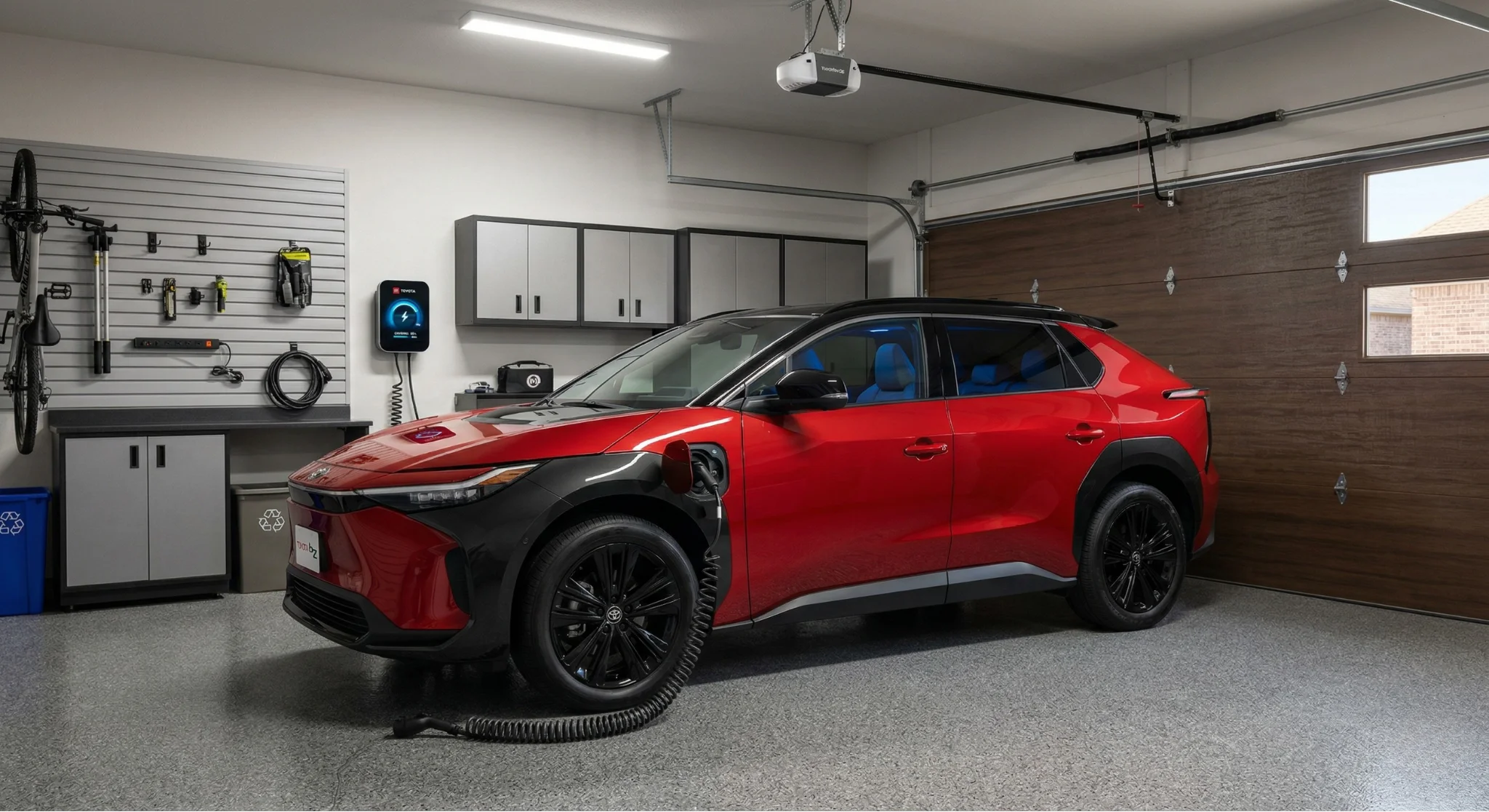
How Each Option Delivers Power
The first thing to understand is how much electricity each setup can deliver to your car. A hardwired charger connects directly to your electrical panel through dedicated wiring. A plug-in charger connects to a NEMA 14-50 outlet — the same 240-volt, 50-amp receptacle originally designed for electric ranges and RV hookups — and under the National Electrical Code's 80% continuous-load rule, sustained output is capped below the outlet's full rating.
| Specification | Hardwired Charger | Plug-In Charger (NEMA 14-50) |
|---|---|---|
| Maximum amperage | Up to 48 amps | 40 amps (NEC 80% rule) |
| Maximum power | 11.5 kW | 9.6 kW |
| Range added per hour | 40–46 miles | 25–30 miles |
| Connection type | Direct to electrical panel | NEMA 14-50 outlet |
| GFCI breaker required | No (internal protection) | Yes (NEC 2020/2023) |
Both options are meaningfully faster than a standard 120-volt household outlet. For context: 9.6 kW means a typical EV adds around 200 miles overnight — for most daily drivers, that's more than enough.
Cost and Installation
Both options require a licensed electrician, a dedicated 240-volt circuit, and a permit. Actual costs depend on panel capacity, the distance from your panel to the charger, and whether your home needs an electrical service upgrade.
Plug-in installs are often slightly cheaper up front because they use standard outlet hardware — but current code (NEC 2020 and 2023) requires GFCI protection for 240-volt receptacles in garages and outdoor locations, which adds over $100 for the breaker alone and can cause nuisance tripping with some chargers. Hardwired installs skip the outlet and the GFCI breaker requirement entirely (the charger's internal ground-fault protection handles it), which sometimes makes them comparable in cost. For a full cost breakdown, see our guide to home charging installation costs.
Safety and Long-Term Reliability
Both options are safe when installed to code. The difference is structural.
Hardwired chargers have no plug-and-outlet connection to wear out over time — one fewer point of failure, which makes them well-suited for outdoor and weather-exposed locations.
Plug-in chargers are equally safe when installed correctly, but the outlet itself matters. Cheap residential-grade NEMA 14-50 receptacles can overheat under sustained 40-amp loads — this is the single biggest source of plug-in charger problems. Use an industrial-grade or EV-rated outlet (look for a small green-car symbol on the face), and have it installed on its own dedicated 50-amp circuit with properly torqued connections. Choose UL-listed equipment either way.
Flexibility for Renters and Frequent Movers
This is where plug-in chargers shine. Because they unplug, you can take the charger with you when you move, or swap it out for a newer model without rewiring. Renters who may not have permission for permanent electrical work often choose plug-in for this reason. If your living situation might change in the next few years, the portability is worth considering.
Hardwired chargers commit to the house, not to you — which is usually an advantage for long-term owners but a drawback if you expect to relocate.
Matching the Charger to Your Toyota
Your vehicle's onboard charger sets the real ceiling. A hardwired 48-amp charger can't make your car accept more electricity than its onboard AC charger is rated for — which is why your specific vehicle matters more than the charger's maximum output. Toyota's electrified lineup shows how this plays out across different models.
| Vehicle | Onboard AC Charger | Level 2 Full Charge |
|---|---|---|
| 2026 RAV4 Plug-In Hybrid (SE, GR SPORT) | 7 kW | ~3.5–4 hours |
| 2026 RAV4 Plug-In Hybrid (XSE, Woodland) | 11 kW | ~2.5 hours |
| 2026 Toyota bZ | 11 kW | ~7 hours |
For the 7 kW RAV4 Plug-In Hybrid trims, a standard 40-amp plug-in setup already delivers more power than the vehicle can accept — so there's no charging-speed advantage to going hardwired on those trims. Explore the 2026 RAV4 Plug-in Hybrid inventory to see what's available.
For the 11 kW models (RAV4 PHEV XSE/Woodland and the bZ), hardwired delivers every amp the vehicle can accept; plug-in still delivers a full overnight charge with some capacity to spare. Toyota ships every bZ with a dual-voltage charging cable, and per Toyota's own guidance, at-home Level 2 charging with this cable requires a 240-volt NEMA 14-50 outlet — so plug-in is directly supported out of the box. Explore the 2026 Toyota bZ inventory at North Hollywood Toyota.
For drivers across North Hollywood, Burbank, Studio City, and Toluca Lake — where most daily mileage is commuter range — either charger type will have your vehicle ready by morning. The decision usually comes down to your living situation, not your car.
How to Decide
Two questions usually settle it:
- How long will you be in your current home? Hardwired is the permanent fixture that pays off over years of ownership. Plug-in is the portable solution that moves with you.
- What's your vehicle's onboard charger capacity? If it's at or below 40 amps / 9.6 kW, a plug-in setup delivers everything your car can accept. If it's higher (like the bZ's 11 kW or the RAV4 PHEV XSE/Woodland's 11 kW), hardwired unlocks additional speed — though plug-in still delivers a full overnight charge.
Whichever you choose, hire a licensed electrician, pull a permit, and make sure the installation is inspected. That's non-negotiable — and it protects both your home and your vehicle's warranty.
Home charging should be the easy part of EV ownership. Once the right setup is in place, you plug in, walk away, and wake up to a full battery. If you're shopping for an electrified Toyota or want to talk through home charging options, stop by North Hollywood Toyota at 4606 Lankershim Blvd or call us at 818-369-3922.